Asked about the pipes in winter
Who owns the water pipe running to our house?
Answered by Asked in Ayrshire · Updated · Sources at the foot
The water pipe to your house is split in two: Scottish Water owns the communication pipe in the street up to the boundary stopcock, and the supply pipe from there into the house is usually yours.
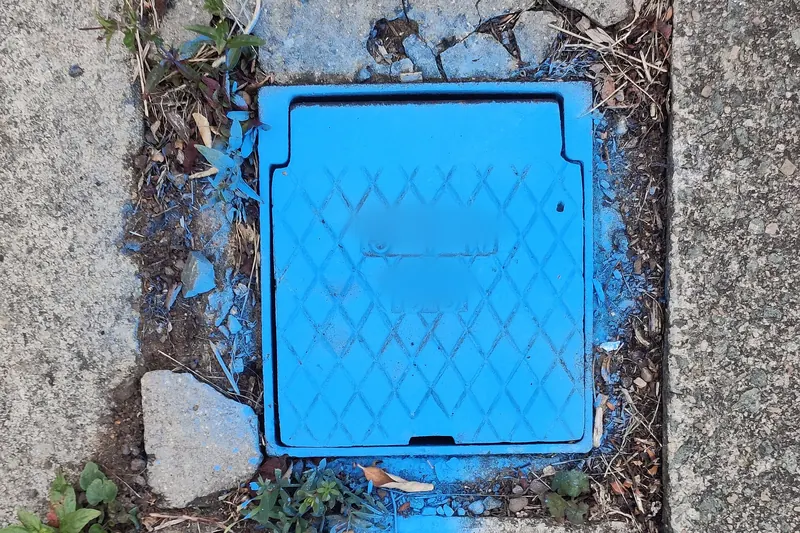
This matters most when something goes wrong: a leak in the field, low pressure, a lead pipe, or a burst under the drive. Knowing which side of the line it is on tells you who should deal with it and who pays.
In a town street the line is short and obvious. On a farm or at the end of a long track it can be hundreds of metres from the house, and the pipe may cross someone else's land or be shared with neighbours.
Which part does Scottish Water own?
Scottish Water owns the communication pipe, the short section in the street between the water main and your property. The Drinking Water Quality Regulator's supply pipes leaflet describes it as the part of the service pipe and connection within the street, and says Scottish Water replaces any lead it finds in that part.
Scottish Government guidance on the Repairing Standard puts the dividing point at the boundary stopcock: the communication pipe runs up to it, and the system from that stopcock onward is the property side.
Which part is ours?
The supply pipe from the boundary stopcock into the house, and every pipe inside, belong to the property owner. The DWQR's lead page says the same: pipework between the stop tap and the property is the owner's responsibility. The DWQR leaflet calls the inside pipes the domestic distribution system and says both are the owners' responsibility.
For a farmhouse at the end of a long track, that can mean a long buried pipe under fields, a farm road or a burn crossing. A leak anywhere on it is usually the owner's to find and fix, so it is worth knowing roughly where it runs. Signs of a leak include a wet patch that never dries, lush grass in a line, or pressure that keeps dropping.
What if the pipe is shared?
Where one supply pipe serves several houses, the owners share responsibility for the common part. The DWQR leaflet says responsibility for a shared supply sits with the owners of its common elements. This is common with cottages along a farm road, or houses split off a steading.
Check your title deeds for any rights or burdens covering the pipe, especially where it crosses a neighbour's land. If you are buying, ask your solicitor to check this; it is easier to settle before a leak than during one. The paperwork section has more on sales and rules.
And with a private water supply?
If your water comes from a spring, well or borehole rather than the mains, Scottish Water owns none of it. The DWQR leaflet says responsibility for all or parts of a private supply's pipework will be set by local agreement in the property title deeds. Water testing for private supplies is arranged through your council's environmental health team; see who tests a private water supply.
Who fixes a leak?
On your side of the boundary, a qualified plumber. The DWQR's WaterSafe page explains that approved contractors are trained in the water fittings rules and byelaws. On the public side, report it to Scottish Water through its website or customer helpline.
If you replace a lead supply pipe on your side, you can ask Scottish Water to replace any lead in its communication pipe too; the lead pipes page explains how that works.
What to look at first
- Where the boundary stopcock is: road end, verge or field gate.
- The route of the supply pipe from there to the house.
- Your title deeds: any shared pipe or rights over a neighbour's land.
- Whether you are on mains water or a private supply.
- Any wet patches or lines of lush grass along the route.
Yours to do, and theirs
You can
- Find the boundary cover and sketch the pipe route for the house file.
- Check the title deeds or ask your solicitor about shared pipes.
- Report leaks you see on the public side to Scottish Water.
Leave to them
- Repairs on the supply pipe are for a qualified plumber (WaterSafe lists approved ones).
- The communication pipe and boundary stopcock are Scottish Water's to repair.
- Private supply testing is for the council's environmental health team.
| Pipe | Where it runs | Usually responsible |
|---|---|---|
| Water main | Under the road | Scottish Water |
| Communication pipe | From the main to the boundary stopcock | Scottish Water |
| Supply pipe | From the boundary stopcock into the house | The property owner, or owners jointly if shared |
| Pipes inside the house | Kitchen, bathroom, loft and tank | The property owner |
In short
Scottish Water's responsibility ends at the boundary stopcock; the supply pipe from there in, and every pipe inside, is the owner's. On farms and shared tracks, check the title deeds, because that pipe can be long and shared.
Also asked about this
Who pays to dig up a leaking supply pipe under a neighbour's field?
Usually the owner or owners of that supply pipe. Your title deeds may set out the right to access it.
Does our home insurance cover the supply pipe?
Some policies do and some don't. Check the wording for underground service pipes before you need to claim.
Can we get a new, separate supply pipe instead of a shared one?
Possibly, but it is a bigger job involving a new connection. Ask Scottish Water and a qualified plumber what is involved before planning it.
How do we find out where an old supply pipe runs?
Check the title plans, old surveys and the boundary cover's position, and ask neighbours on the same track. A plumber with leak-detection kit can trace it.
Sources, checked 5 November 2026
- Drinking Water Quality Regulator for Scotland — Lead in drinking water: understanding supply pipes (leaflet, June 2021)
- Scottish Government — Repairing Standard statutory guidance, Annex D1: installations for the supply of water
- Drinking Water Quality Regulator for Scotland — Lead in drinking water
- Drinking Water Quality Regulator for Scotland — WaterSafe scheme: find an approved plumber
- mygov.scot — Scottish Water