Asked about the pipes in winter
How do we know if we still have lead pipes?
Answered by Asked in Ayrshire · Updated · Sources at the foot
To know if you still have lead pipes, look at the pipe coming into the house under the kitchen sink: lead is dull grey, scratches easily to shiny silver, and may have bulges at the joints.
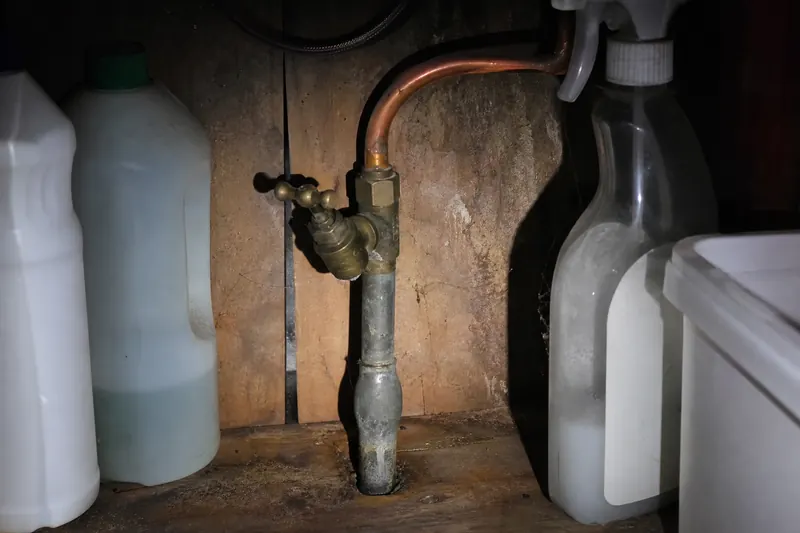
Lead pipes were once common in Scottish houses, and many older farmhouses, cottages and coastal villas in Ayrshire were built long before they stopped being used. Some have been replaced over the years; some have only been replaced inside, leaving an old lead pipe under the garden.
Water leaves the treatment works without lead. It picks lead up on the way, from lead pipes, lead tanks, old solder or poor-quality brass fittings, especially when it sits in the pipes overnight.
Which houses are most likely to have lead?
Houses built before 1970 are the most likely. The Drinking Water Quality Regulator for Scotland says premises built before 1970 are most likely to have had lead pipes originally, though some have since been replaced, and Scottish Government guidance says lead is more common in houses built before 1970 that have not had their pipes, tanks or fittings replaced.
A modernised kitchen does not prove the house is lead-free. The underground supply pipe from the boundary stopcock and an old cold-water tank in the loft can both still be lead.
How do we check the pipe?
Look under the kitchen sink, where the supply usually comes up through the floor near the stopcock. The DWQR says lead pipes are dull grey, can be easily scratched to reveal shiny silver metal, and may have slight bulges at the joints.
Gently scratch the pipe with a coin. Copper is reddish-brown, iron is hard and rusty, and plastic is usually blue, black or white. Check the loft tank and any old pipes in porches or outbuildings too. If you find a short copper pipe joined onto grey pipe below the floor, the underground part may still be lead.
Can we get the water tested?
On the mains, yes. The DWQR's supply pipes leaflet says that if you believe lead is present, you can ask Scottish Water to take a sample from your property and tell you the results. On a private supply, the same leaflet says to contact your council's environmental health department to arrange a sample.
The drinking water standard for lead is 10 micrograms per litre (10µg/l), in force since December 2013, according to the DWQR (checked November 2026). Children, babies and pregnant women are most at risk.
What do we do in the meantime?
Run off water that has stood in the pipes before drinking it. The DWQR advises not drinking water that has stood for a long time, such as overnight, and drawing off a washing-up bowlful from the kitchen tap first; that water can go on plants. If the lead pipe run is longer than 40 metres, draw off more.
These steps help reduce exposure but are not a fix; the DWQR says the only certain way is to remove all lead pipework.
Who pays to replace it?
The owner pays for the supply pipe and inside pipes. Once you have replaced all your lead pipework, the DWQR says you can ask Scottish Water to replace any small lead sections on its side, between the main and the stop valve, free of charge. See who owns the water pipe to our house for that split.
Some councils may give a small grant through their scheme of assistance for housing improvement, but the DWQR says funding is finite and varies between councils; ask East, North or South Ayrshire Council. If you are on a private supply as your main drinking water, mygov.scot lists replacing lead pipes among the uses of the private water supply grant of up to £800 per property (as of November 2026); see the private supply grant. Landlords must remove lead under the Repairing Standard.
What to look at first
- The pipe under the kitchen sink: dull grey, soft, shiny when scratched?
- Bulges at joints, where lead was wiped by hand.
- The cold-water tank in the loft: lead-lined or plastic?
- Any grey pipe below a newer copper section in the floor.
- The age of the house and any records of past replumbing.
Yours to do, and theirs
You can
- Check the pipes under the sink and in the loft.
- Ask Scottish Water for a lead sample (mains) or the council's environmental health team (private supply).
- Run off standing water before drinking or cooking.
Leave to them
- Replacing lead supply and inside pipes is for a qualified plumber (WaterSafe lists approved ones).
- Replacing lead in the communication pipe is Scottish Water's job, on request once yours is done.
| Material | Colour | Scratch test |
|---|---|---|
| Lead | Dull grey, bulging joints | Soft, scratches to shiny silver |
| Copper | Reddish-brown or dull green | Scratches to bright copper colour |
| Iron | Dark grey or rusty | Hard, does not scratch easily |
| Plastic | Blue, black or white | Does not reveal metal |
Safety first
If pregnant women, babies or young children live in a house that may have lead pipes, ask for a water sample now and run off standing water before every drink until the result is back.
In short
Look under the kitchen sink: dull grey pipe that scratches to shiny silver is lead. Ask for a water sample, run off standing water before drinking, and plan to replace all of it, then ask Scottish Water to replace its section.
Also asked about this
Does a water filter jug remove lead?
Some filters are designed to reduce lead, but check the maker's claims. Replacing the pipe is the only certain fix, according to the DWQR.
Is lead a problem on a private spring or well supply?
It can be, if the pipes or tank are lead. The DWQR leaflet says to ask your council's environmental health department for a sample.
Will a home report mention lead pipes?
It may note them if the surveyor sees them. Ask your solicitor to check, and look under the sink at a viewing.
Can lead come from brass taps or solder?
Yes. The DWQR names lead solder on copper pipe and poor-quality brass fittings as sources too.
Sources, checked 5 November 2026
- Drinking Water Quality Regulator for Scotland — Lead in drinking water
- Drinking Water Quality Regulator for Scotland — Lead in drinking water: understanding supply pipes (leaflet, June 2021)
- Scottish Government — Repairing Standard statutory guidance, Annex D1: installations for the supply of water
- mygov.scot — Apply for a private water supply grant
- Drinking Water Quality Regulator for Scotland — WaterSafe scheme: find an approved plumber