Asked about the pipes in winter
How do we stop pipes freezing in an exposed house?
Answered by Asked in Ayrshire · Updated · Sources at the foot
To stop pipes freezing in an exposed house, lag every pipe in cold spaces, keep some heat on day and night, cut draughts, and know where your stopcock is before the first hard frost.
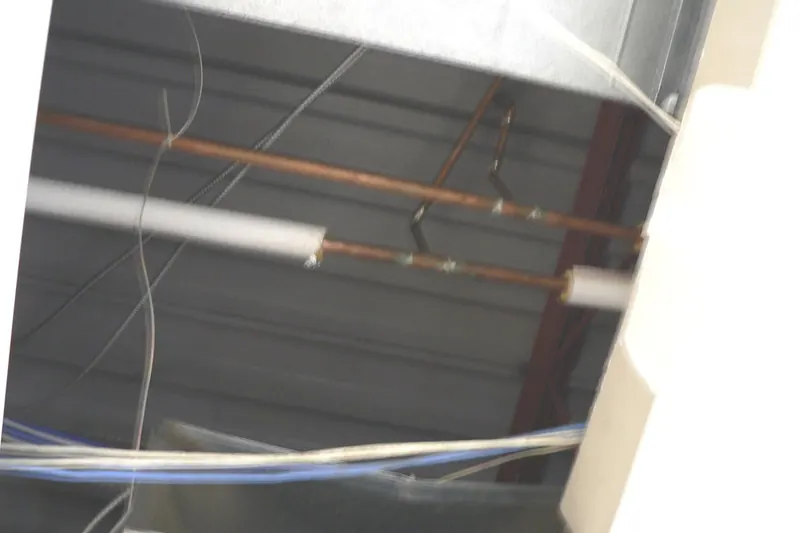
A farmhouse on a hill above the Doon, or a cottage taking the full wind off the Firth of Clyde, loses heat fast. The pipes most at risk are the ones you rarely see: in the loft, under a suspended timber floor, along an outside wall of a steading conversion, or feeding an outside tap.
Most of the work is foam lagging, draught-stopping and checking the forecast. It helps reduce the risk of a freeze; it doesn't remove it in a long, hard cold spell.
Which pipes freeze first?
Pipes in unheated spaces freeze first, especially where cold air moves across them. The Met Office's frozen pipe advice asks you to insulate all pipes in the roof space or loft, and pipes anywhere else that may be vulnerable to the cold.
In older Ayrshire houses that means the loft tank, pipes through a byre or outhouse, a supply pipe rising through a draughty floor, and pipes fixed to a cold stone wall. Walk round with a torch on a mild day and note each one.
How do we lag pipes properly?
Fit split foam pipe lagging that matches the pipe size, with the joins taped and no gaps at bends, valves or where the pipe goes through a wall. Cover elbows and tees rather than leaving them bare.
In the loft, the cold-water tank sits in the same cold air as the pipes, so lag it as well. East Ayrshire Council's frost advice also suggests leaving the loft hatch open a little in really cold weather.
Keep a little heat on
Warmth inside is the cheapest protection you have. East Ayrshire Council advises keeping your home reasonably warm day and night in cold weather, reducing draughts wherever possible, and never leaving a tap dripping.
If you are going away, the Met Office says to leave your heating on low and ask a neighbour to check inside occasionally. For a holiday let or a second home left over the winter, see how to look after a cottage left empty, and keep the boiler serviced so it does not fail in the first cold week. If yours is oil-fired, see who should service the oil boiler.
Outside taps, byres and long runs
Outside taps and pipes to outbuildings are the usual weak points on a farm or smallholding. If there is an isolating valve on the pipe inside the house, close it for the winter and open the outside tap to let it drain. Lag any section you cannot drain.
Where a buried pipe rises out of the ground into a building it is often shallow and exposed, so give that section the thickest lagging you can fit. If your water comes from a spring or borehole rather than the mains, pumps and pressure vessels need frost protection too; see the water supply section.
Do we know where the stopcock is?
If you don't know where your stopcock is, find it now. North Ayrshire Council says it will be where the water pipe enters the house, and the Met Office says to know where your stop tap is and check it works every six months. In an old farmhouse it can be in an odd place, so read where the stopcock is in an old farmhouse.
Turn it off and on once to make sure it moves. If it is seized or weeps when turned, ask a plumber to replace it during the autumn rather than in a freeze.
What to look at first
- Every pipe in the loft, under floors and in outbuildings: is it lagged, with no gaps at bends?
- The loft tank: lagged, with its pipes?
- Outside taps: isolated and drained, or lagged?
- The stopcock: found, labelled and turning freely?
- The heating: serviced and set to keep some heat on if you go away?
Yours to do, and theirs
You can
- Fit foam lagging to pipes and tanks you can reach safely.
- Drain outside taps and fit draught-stoppers round pipe holes.
- Find and test the stopcock, and label it for everyone in the house.
Leave to them
- Replacing a seized stopcock or rerouting a pipe off a cold wall is work for a qualified plumber (WaterSafe lists approved ones).
- Boiler and burner servicing is for an OFTEC-registered technician (oil) or a Gas Safe registered engineer (gas or LPG).
| Place | Why it freezes | What helps |
|---|---|---|
| Loft and roof tank | No heat, cold air from eaves | Lag pipes and tank; hatch open a little in hard frost |
| Under a suspended floor | Air vents let wind under the house | Lag pipes; keep vents clear but pipes covered |
| Outside tap and byre pipes | Fully exposed | Isolate and drain for winter, or lag |
| Pipe rising from the ground | Shallow and in the wind | Thickest lagging you can fit |
In short
Lag every pipe in a cold space with no gaps, keep a little heat on day and night, and drain outside taps for the winter. Know where your stopcock is and that it turns, because a freeze can still happen in a long cold spell.
Also asked about this
Should we leave a tap running to stop pipes freezing?
East Ayrshire Council advises never leaving a tap dripping. Insulation and low background heat are the safer approach.
Do heat tapes or trace heating help on exposed pipes?
Electric trace heating is sometimes used on pipes that cannot be kept warm otherwise. It needs a proper outdoor-rated supply, so have an electrician fit it.
Is it worth lagging pipes in a heated kitchen?
Usually not, unless the pipe runs along a cold outside wall or near an air vent. Concentrate on unheated spaces first.
How cold does it need to be for pipes to freeze?
It depends on wind, how long the cold lasts and how exposed the pipe is. Watch the Met Office forecast and act when hard frosts are due.
Sources, checked 5 November 2026
- Met Office — What to do if you have a frozen or burst pipe
- East Ayrshire Council — Home emergencies and frost precautions
- North Ayrshire Council — Cold weather advice for tenants
- mygov.scot — Protect your water pipes in cold weather
- Drinking Water Quality Regulator for Scotland — WaterSafe scheme: find an approved plumber