Asked about the pipes in winter
What do we do if a pipe has frozen?
Answered by Asked in Ayrshire · Updated · Sources at the foot
If a pipe has frozen, turn off the stopcock, open the nearest cold tap, check the pipe for splits, then thaw it slowly with hot-water bottles or warm cloths and never a flame.
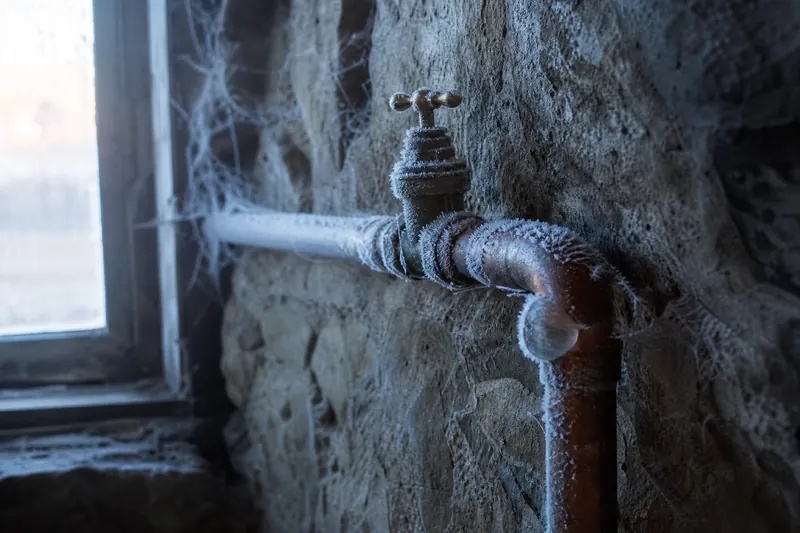
The first sign is usually a tap that gives a trickle or nothing on a cold morning. In a farmhouse or cottage it is often the kitchen tap on an outside wall, a pipe through the loft, or the feed to an outbuilding.
A frozen pipe is not yet a burst, but ice can split a pipe, and the leak often only shows once it thaws. Going slowly and shutting the water off first makes the thaw much less likely to flood the house.
What should we do first?
Turn off the stopcock first, then open the cold tap nearest the frozen section. The Met Office's frozen pipe advice says to turn off your inside stop tap immediately if you suspect a frozen pipe, and to turn on nearby cold taps (keeping the stop tap off) to relieve pressure on the frozen pipe.
If you are not sure where the stopcock is, see where the stopcock is in an old farmhouse. North Ayrshire Council notes it will be where the water pipe enters the house, usually under the kitchen sink or in the bathroom.
How do we find the frozen section?
Trace the pipe back from the tap that has stopped. The frozen part is usually where it passes the coldest place: an outside wall, under the floor, the loft or an unheated porch.
Look closely along it for a bulge, a split or a joint that has pushed apart. If you find damage, keep the stopcock off and treat it as a burst; the steps are on what to do when a pipe bursts.
How do we thaw it safely?
Thaw it slowly, working from the tap end back towards the frozen part. The Met Office says it is best to thaw pipes slowly with hot-water bottles or towels soaked in hot water, and never to use a blowtorch or naked flame, as direct heat may cause permanent damage. North Ayrshire Council also suggests hot-water bottles, or leaving the pipe frozen if you are unsure.
A hair dryer on its low setting, held well away from any water and with the flex kept dry, is a gentle option for a short dry run of pipe. Never stand in water while using one. Warming the room helps too; East Ayrshire Council suggests leaving the loft hatch open a little in really cold weather.
What about the hot water and boiler?
If the hot water system has frozen, switch off the water heater, as North Ayrshire Council advises. Leave the immersion heater off until water is flowing normally again, and don't keep firing the boiler while its pipes may be frozen.
If the boiler is gas or LPG, any work on it is for a Gas Safe registered engineer; if oil, an OFTEC-registered technician. See who should service the oil boiler.
Once the water flows again
Turn the stopcock back on slowly and watch the thawed section and every joint near it for drips for the next hour. A pipe that froze once is likely to freeze again in the same spot, so lag it properly once it is dry; stopping pipes freezing in an exposed house covers that.
If the pipe will not thaw, or you can't reach it, call a qualified plumber. The WaterSafe scheme described by the Drinking Water Quality Regulator lists approved contractors trained in the water fittings rules and byelaws.
What to look at first
- Which taps have stopped, hot or cold, and where those pipes run.
- The stopcock: off before you start thawing.
- The pipe itself: any bulge, split or joint pulled apart?
- The water heater or immersion: switched off if the hot side is frozen.
- Any water near sockets or light fittings.
Yours to do, and theirs
You can
- Turn off the stopcock and open the nearest cold tap.
- Thaw gently with hot-water bottles, warm cloths or a hair dryer on low held away from water.
- Switch off the immersion or water heater if the hot side has frozen.
Leave to them
- A split pipe or a joint that has failed is for a qualified plumber.
- A boiler that has locked out is for a Gas Safe registered engineer (gas or LPG) or an OFTEC-registered technician (oil).
| Method | Safe to use? | Notes |
|---|---|---|
| Hot-water bottle or towels soaked in hot water | Yes | Slow and gentle, as the Met Office advises |
| Hair dryer on low | Yes, with care | Keep it and the flex away from any water |
| Warming the room | Yes | Open the loft hatch or a door to a heated room |
| Blowtorch or any naked flame | No | Can damage the pipe and start a fire |
Safety first
If water is near sockets, switches or light fittings, keep clear of them. Switch off at the consumer unit only if it is dry and safe to reach; otherwise stay away and call an electrician.
In short
Shut the stopcock, open a nearby cold tap, and check the pipe for damage before you warm it. Thaw slowly with gentle heat, never a flame, then watch the joints for leaks once the water is back on.
Also asked about this
Why is only the cold kitchen tap frozen and not the others?
The kitchen supply often runs along an outside wall or through a cold floor before it reaches the sink. Check where that pipe enters the house.
Can we pour boiling water over a frozen pipe?
Sudden heat can stress a pipe and joints, and boiling water is a scald risk. Hot-water bottles or towels soaked in hot water are gentler.
How long does a frozen pipe take to thaw?
Anything from a few minutes to some hours, depending on how long and how deep the frozen section is. Keep checking for drips while it thaws.
Should we use the toilet when the water is frozen?
You can flush once if the cistern is full, but it will not refill until the water flows again. Keep a bucket of water aside for flushing during cold spells.
Sources, checked 5 November 2026
- Met Office — What to do if you have a frozen or burst pipe
- North Ayrshire Council — Cold weather advice for tenants
- East Ayrshire Council — Home emergencies and frost precautions
- Drinking Water Quality Regulator for Scotland — WaterSafe scheme: find an approved plumber
- mygov.scot — Protect your water pipes in cold weather