Asked about the water supply
Why does the pressure on our private supply keep dropping?
Answered by Asked in Ayrshire · Updated · Sources at the foot
Pressure on a private supply usually keeps dropping because a filter cartridge is clogging, the source runs low in dry weather, or the pump and pressure vessel are struggling.
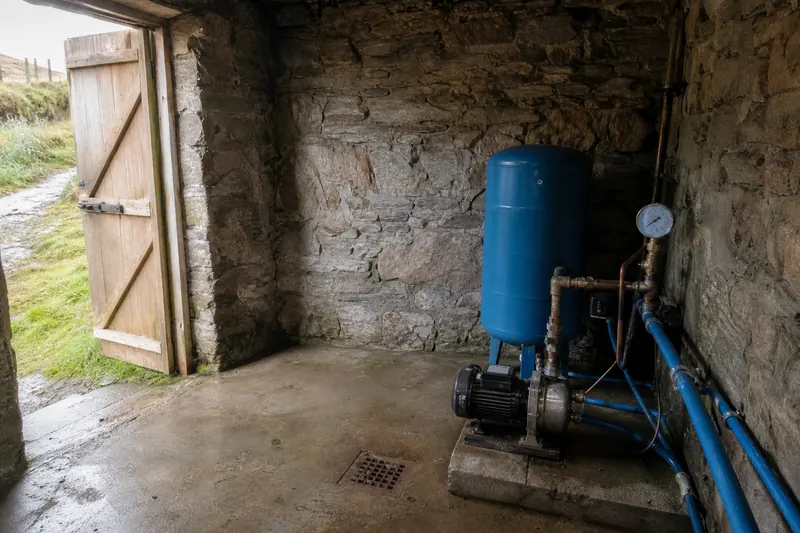
On a mains supply, pressure is Scottish Water's problem. On a spring or borehole it's yours, and the cause is usually somewhere between the hill and the tap.
The good news is that the first checks are simple and safe. The less good news is that some causes, such as a source drying up, need the council's help rather than a spanner.
Is a blocked filter the culprit?
Often, yes. The Drinking Water Quality Regulator's filter guidance says cartridges are replaced once flow through them falls to a certain level, as their pores clog. It also warns that filters sized too small for the flow may block, and that ploughing near the source can quickly clog them.
mygov.scot's maintenance advice is to replace filters when they're dirty or blocked; used cartridges can't be reused. If pressure recovers after a change, keep a note of how long cartridges last and hold spares, as the regulator recommends.
Could the source be running low?
In a dry spell, yes. A spring or shallow well that is fine in a wet Ayrshire winter can dwindle in a dry summer. mygov.scot asks owners to plan how they'd get water in an emergency such as a drought or storm.
If the supply stops or keeps failing and you can't find why, mygov.scot says to contact the council's environmental health department. Citizens Advice Scotland likewise points to the council for dry-weather interruptions.
What about the pump and pressure vessel?
Many supplies have a pump and a pressure vessel in a shed or cellar. If the pump starts and stops very often, or pressure swings sharply between showers, the vessel or its controls may need attention. That is a job for a pump engineer, with any electrical faults left to an electrician.
Safe checks for you are limited to looking. Note whether the pump runs constantly, whether a breaker or RCD has tripped, and whether there are wet patches on the pipe route that might mean a leak.
Could cold weather be to blame?
Yes. Exposed runs of pipe on Ayrshire hill ground can freeze, slowing or stopping the flow. mygov.scot advises covering pipes with an insulating sleeve. Our pages on stopping pipes freezing and what to do if a pipe has frozen cover winter in detail.
After any repair or a period with no water, ask the council whether the supply should be tested, as covered on who tests a private supply.
What to look at first
- Is the filter cartridge discoloured or due for a change?
- Has it been dry for weeks, or has the source been disturbed?
- Is the pump running non-stop or cycling on and off quickly?
- Has a breaker or RCD tripped on the pump circuit?
- Any wet ground, frozen sections or damage on the pipe route?
Yours to do, and theirs
You can
- Change dirty filter cartridges as the maker describes, and note the date.
- Check whether the pump's breaker or RCD has tripped; if it trips again, leave it.
- Walk the pipe route and note wet patches or exposed pipe.
Leave to them
- A pump engineer checks the pump, pressure vessel and controls.
- An electrician deals with any repeat tripping or wiring fault.
- The council's environmental health team advises if the supply fails or runs dry.
| Symptom | Likely cause | Who sorts it |
|---|---|---|
| Pressure fades over weeks, recovers after a cartridge change | Clogging filter | You, by changing the cartridge |
| Weak flow in a dry spell | Source running low | Council environmental health |
| Pump clicks on and off often | Pressure vessel or controls | Pump engineer |
| No flow on a frosty morning | Frozen pipe | Thaw gently, plumber if split |
Safety first
Never use a blowtorch or naked flame to thaw a frozen pipe; use warm cloths or a hair dryer on low held away from water. If a breaker trips again after one reset, leave it off and call an electrician.
In short
A clogging filter, a source running low, a struggling pump or vessel, or frost are the usual reasons. Change filters yourself, leave pumps and wiring to the right engineer, and talk to the council if the supply keeps failing.
Also asked about this
Should we bypass the filter to get pressure back?
No. Filters protect the UV unit, which needs clear water to work, so bypassing them can leave water undisinfected.
Can a shared supply lose pressure when neighbours use water?
It can, if the source or pipe is barely big enough. Talk to the other users and the council about the scheme as a whole.
Will the council bring water if our supply dries up?
Councils handle dry-weather problems with private supplies, so contact environmental health early and ask what help is available.
Does low pressure affect the UV unit?
The regulator says UV units are designed for a maximum flow listed in the specification, so ask a specialist if your flow pattern has changed.
Sources, checked 5 November 2026
- Drinking Water Quality Regulator for Scotland — Physical filters
- mygov.scot — Maintaining a private water supply
- mygov.scot — About private water supplies
- mygov.scot — Reporting problems with a private water supply
- Citizens Advice Scotland — Private water supply registration and quality of supply
- Drinking Water Quality Regulator for Scotland — Disinfection by UV radiation