Asked about the water supply
Who tests a private water supply, and how often?
Answered by Asked in Ayrshire · Updated · Sources at the foot
Your council's environmental health team tests a private water supply: at least once a year for regulated supplies, and on request for small single-house supplies, which may carry a fee.
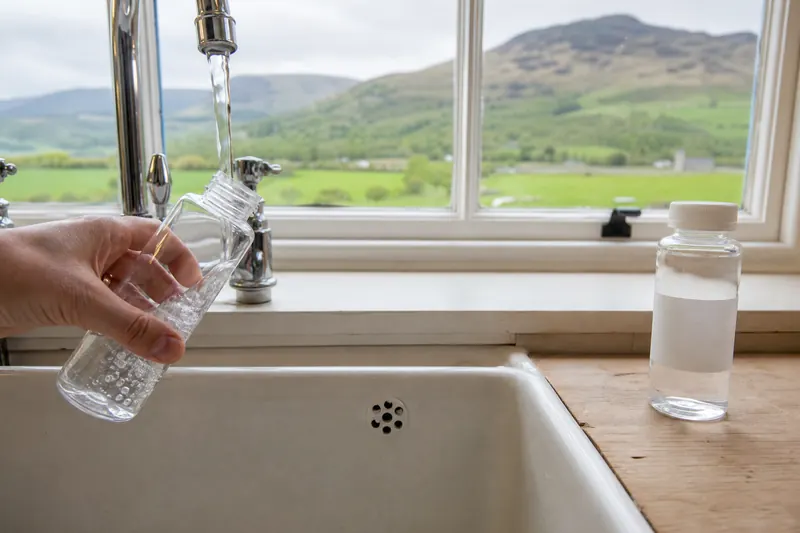
Testing a private supply is not a job for a kitchen-table kit. Samples have to be taken properly, sent to a lab and read against legal standards, and that work sits with East, North or South Ayrshire Council or an accredited laboratory.
What changes from house to house is how often it happens and who pays. That depends on whether your supply counts as regulated or as a small domestic one. If you are not yet sure the house is off the mains at all, start with how to tell if you have a private supply.
Which supplies must the council test every year?
Scotland's 2017 private supply regulations cover the bigger and commercial supplies. A supply is exempt from them if it averages less than 10 cubic metres a day or serves fewer than 50 people, unless any of the water is used for a commercial or public activity.
In plain terms, mygov.scot says the rules apply if the supply feeds a business or rental property (holiday lets included), more than 50 people, or more than 10 cubic metres a day. For these, the council must test at least once a year and risk assess at least once every 5 years.
What about a supply that only serves our house?
East Ayrshire calls these Type B supplies: domestic premises only, fewer than 50 people. The council's page says there is no statutory sampling or risk assessment for them, but it will do both on request.
Asking is sensible. Supplies on open hill ground can change quickly, and East Ayrshire notes the risk of harmful bacteria rises after heavy rain or snowmelt and when water is highly coloured. Our page on brown spring water after rain covers that pattern.
How much does a test cost?
Fees are set by each council. East Ayrshire lists charges from October 2025 of £209 for a regulated sample, £100 for a regulated risk assessment, £148 for a Type B sample and £50 for a Type B risk assessment (checked November 2026). It also charges the fee as a callout if a sample can't be taken on the visit.
In North or South Ayrshire, ask the council's environmental health team for its current fee. mygov.scot says councils can tell you any costs involved.
What happens if a sample fails?
The council will tell you what the result means and what to do. Follow its notice or advice exactly as written: if it says boil, boil.
East Ayrshire's general advice is to boil water used for drinking, ice, brushing teeth and preparing food, and it warns that boiling is no use if the water fails a chemical standard; use another supply instead. Owners may also be expected to make improvements, which is where the private water supply grant can help.
What to look at first
- Does the supply serve a holiday let, rented house or business? If so, it should be registered.
- When did the council last sample and risk assess it?
- Any change in colour, taste or smell, especially after rain.
- Whether UV lamps and filters are in date, so a test reflects normal use.
- Any written advice the council has already given you.
Yours to do, and theirs
You can
- Register the supply with the council and keep its letters together.
- Note dates of heavy rain, snowmelt or discoloured water to tell the council.
- Keep animals away from the source and tank covers on.
Leave to them
- The council's environmental health officer takes samples and risk assesses the supply.
- An accredited laboratory analyses the samples.
- A water treatment specialist sizes and fits any treatment the results call for.
| Supply type | Testing | Listed fee |
|---|---|---|
| Regulated (business, let, 50+ people, 10 cubic metres a day) | At least once a year | £209 per sample |
| Regulated risk assessment | At least once every 5 years | £100 |
| Type B single domestic supply | On request | £148 per sample |
| Type B risk assessment | On request | £50 |
Safety first
If the council advises you to boil water or use another supply, do exactly that until it tells you otherwise. Don't rely on a home test strip to decide the water is safe again.
In short
Regulated supplies are tested by the council at least once a year and risk assessed at least every five years. Small single-house supplies can be tested on request, and East Ayrshire now charges for this.
Also asked about this
Can we take our own sample and post it to a lab?
Sampling technique matters, so ask the council first. It can arrange a proper sample and explain which tests suit your source.
Do tenants have a right to see the results?
Yes. Landlords must tell tenants they use a private supply, and tenants can ask for the risk assessment and test results.
Who checks that councils do their testing?
The Drinking Water Quality Regulator verifies that the 2017 Regulations are complied with, and councils send it an annual return.
Can we complain if we're unhappy with the council's response?
mygov.scot says you can complain to the Drinking Water Quality Regulator.
Sources, checked 5 November 2026
- legislation.gov.uk — Water Intended for Human Consumption (Private Supplies) (Scotland) Regulations 2017, regulation 2
- mygov.scot — Registering, risk assessing and testing private water supplies
- East Ayrshire Council — Private water supplies
- North Ayrshire Council — Water quality and pollution
- Drinking Water Quality Regulator for Scotland — Regulatory guidance and information
- mygov.scot — Reporting problems with a private water supply