Asked about the heating
Is LPG or oil better for a house off the gas grid?
Answered by Asked in Ayrshire · Updated · Sources at the foot
LPG or oil can both heat a house off the gas grid well; the better choice depends on where a tank can safely sit, who services it locally, and whether a heat pump would suit you better.
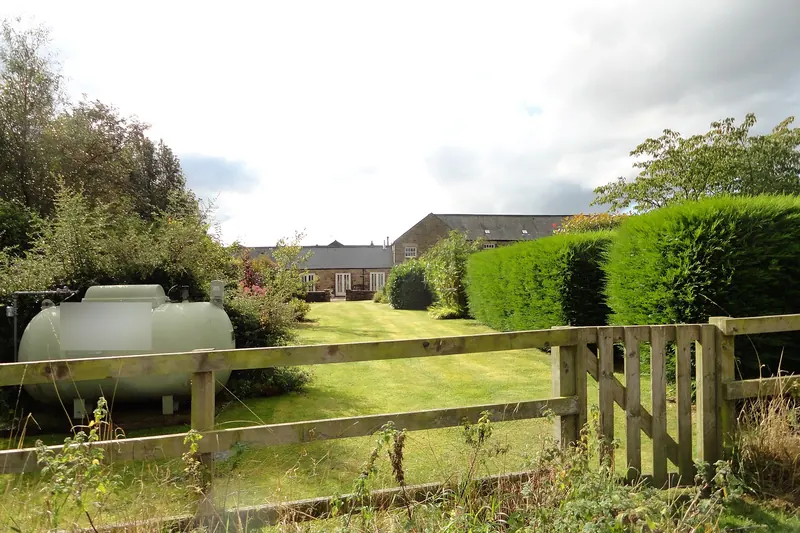
In rural Ayrshire most houses beyond the end of the gas main run on heating oil (kerosene) or LPG, with a few on electric storage heaters or solid fuel. The Scottish Government noted in its call for evidence on off-gas buildings that homes using oil, LPG and coal are much more common in remote and rural areas, and OFTEC describes oil as the most popular off-grid option.
There are no fuel prices on this page. Kerosene and LPG prices move month to month and there was no official, dated Scottish figure to quote, so get current quotes from at least two local suppliers of each.
How do LPG and oil differ day to day?
Both feed a boiler that runs radiators and hot water, so living with them feels much the same. The differences are in the tank, the fuel delivery and who is allowed to work on the system. Oil boilers, burners, fuel lines and tanks are a job for an OFTEC-registered technician; LPG boilers and pipework are gas work and need a Gas Safe registered engineer.
Before choosing LPG, ask whether the tank would be yours or supplied under a contract with the gas company. That affects who looks after the tank and how easy it is to change supplier, so read any contract closely before signing.
Where can each tank go?
The Scottish building standards guidance on fuel storage sets out fire protection for oil tanks: for example, a tank within 1.8m of a building or 760mm of a boundary needs extra protection such as a non-combustible base, barrier or wall. That page does not cover LPG; the supplier and a Gas Safe engineer set LPG tank positions. More on oil tank siting is in how close can an oil tank be to the house.
On an exposed farm, think about the tanker route too. A lorry has to reach the tank in winter, and a long hose run over a yard is a nuisance with either fuel.
Is one safer than the other?
Each has its own hazards, and both can be run safely when installed and serviced by the right registered person. LPG is a gas leak risk; oil is a pollution risk if it leaks into a drain or burn, which is covered in what to do if heating oil leaks. Both are fuel-burning appliances, so both need a carbon monoxide alarm in the same room, as the Scottish Government's alarm rules set out.
What about the 2045 target?
The Scottish Government says it is committed to decarbonising heat in buildings by 2045, and its future plans page says a bill for existing buildings was to be introduced after the May 2026 election. Neither LPG nor oil is banned in existing homes today, but if you are changing system anyway, compare the cost of a heat pump with the Home Energy Scotland grant before committing to a new fossil fuel tank; should we swap the oil boiler for a heat pump walks through that choice.
Safety first
If you smell LPG, don't use switches, flames or anything that could spark, open doors and windows, get everyone out, and call the supplier's emergency number shown on the tank or bill from outside. Don't go back in until the supplier says it is safe.
What to look at first
- Where a tank could sit, measured from the house and the boundary.
- Whether a tanker can reach that spot in winter.
- Who services each fuel within reach of your village.
- The terms of any LPG supply or tank lease contract.
- Whether a heat pump with the grant would cost less over time.
Yours to do, and theirs
You can
- Get written supply quotes for both fuels and read the contract terms.
- Fit a carbon monoxide alarm in any room with a fuel-burning appliance.
- Ask Home Energy Scotland for free, impartial advice on heat pumps.
Leave to them
- A Gas Safe registered engineer installs and services LPG appliances and pipework.
- An OFTEC-registered technician installs and services oil boilers, fuel lines and tanks.
| Point | LPG | Heating oil |
|---|---|---|
| Who works on it | Gas Safe registered engineer | OFTEC-registered technician |
| Ask about the tank | Who owns it and the contract terms | Age, bund and condition |
| Main leak risk | Gas escape | Pollution of drains and burns |
| Emergency if it leaks | Supplier's emergency number | SEPA advice for oil spills |
In short
Neither fuel is clearly better everywhere: it comes down to tank space, local servicing and contract terms. Both need the right registered engineer and a carbon monoxide alarm. If you are replacing a system, price a heat pump with the grant first.
Also asked about this
Can we switch from oil to LPG with the same boiler?
No. They need different boilers or burners, and the change is work for a Gas Safe registered engineer on the LPG side and an OFTEC-registered technician to decommission the oil side.
Do LPG bottles count as a gas supply for safety checks?
Yes, appliances on bottled LPG are gas appliances and should be fitted and serviced by a Gas Safe registered engineer.
Does an LPG boiler need a carbon monoxide alarm?
Yes. Scottish rules require a carbon monoxide detector in the same room as a carbon-fuelled appliance such as a boiler.
Can a new house be built with an oil or LPG boiler?
The New Build Heat Standard says fossil fuel gas and oil boilers cannot be the main heating in new-build homes.
Sources, checked 5 November 2026
- Scottish Government — Future of low carbon heat for off gas buildings: call for evidence
- OFTEC — Consumers
- Scottish Government — Technical Handbook (Domestic), April 2026, 3.23 Fuel storage, protection from fire
- Scottish Government — Technical Handbook (Domestic), April 2026, 3.17 Combustion appliances, safe operation
- Scottish Government — Fire and smoke alarms: the law
- Scottish Government — Heat in buildings: future plans
- Scottish Government — New Build Heat Standard factsheet