Asked about the heating
Do we need a carbon monoxide alarm, and where?
Answered by Asked in Ayrshire · Updated · Sources at the foot
Yes, every Scottish home with a carbon-fuelled appliance such as an oil or LPG boiler, open fire or wood burner must have a carbon monoxide alarm in the same room as that appliance.
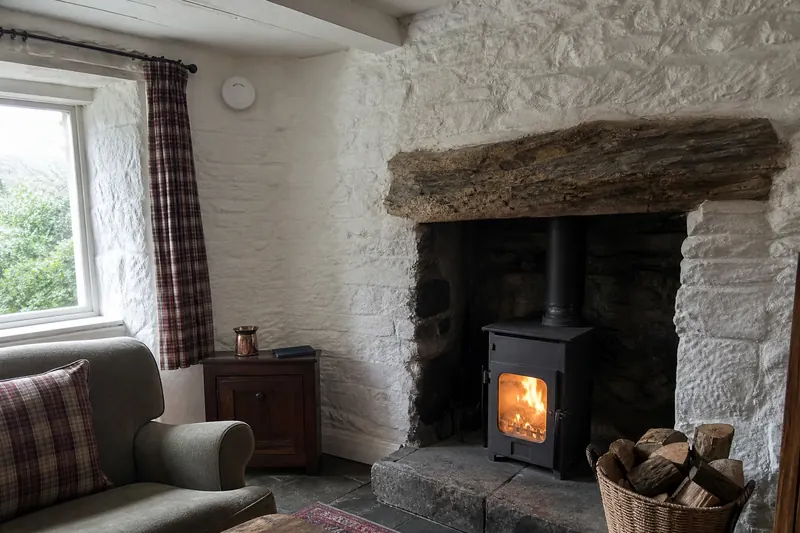
Carbon monoxide has no smell or colour, which is why an alarm matters most in exactly the houses this site is about: oil and LPG boilers, stoves, open fires and old flues in thick stone chimneys. In Scotland it is also the law, under the standard every home has to meet.
The Scottish Government's fire and smoke alarms page says that if you have a carbon-fuelled appliance like a boiler, open fire or wood burner, you must also have a carbon monoxide detector in the same room. It is the property owner's responsibility to meet the standard. Gas cookers and hobs do not need one.
Which appliances need a carbon monoxide alarm?
Any carbon-fuelled appliance: mygov.scot lists a boiler, fire, flue or non-electric heater. That covers oil and LPG boilers, wood and multi-fuel stoves, open fires and flueless gas heaters. If the boiler sits in an outhouse or utility room, the alarm goes in that room.
Where exactly should it go?
In the same room as the appliance. The building standards guidance in the Technical Handbook (Domestic), section 3.20 gives the detail for new installations:
- on the ceiling, at least 300mm from any wall, or
- on a wall, at least 150mm below the ceiling and higher than any door or window in the room,
- between 1m and 3m from the appliance.
It also says to avoid enclosed spaces, spots blocked by furniture or curtains, directly above a sink, next to doors, windows, extract fans or vents, damp areas, and close to cooking appliances.
Does it need to be wired in or linked?
No link is needed. The carbon monoxide alarm does not have to be interlinked with the smoke and heat alarms, unlike those, which must be. mygov.scot says that if a carbon monoxide alarm uses batteries, it must have a sealed battery for its whole lifespan, and that mains-wired alarms should be fitted by a qualified electrician. Section 3.20 says detectors should meet BS EN 50291-1 and warn you when their working life is about to end.
What are the warning signs besides the alarm?
The Health and Safety Executive lists symptoms that are easily mistaken for flu or tiredness: headaches or dizziness, breathlessness, nausea, tiredness, chest or stomach pains, erratic behaviour, visual problems and loss of consciousness. It also lists appliance signs: yellow or orange flames instead of blue, soot or yellow-brown staining on or around appliances, pilot lights that keep blowing out, and more condensation inside windows.
If symptoms ease when you are out of the house and return at home, take that seriously.
Safety first
If the carbon monoxide alarm sounds or anyone has symptoms, get everyone out into fresh air straight away and leave the doors open behind you. Make every call from outside: the National Gas Emergency Service on 0800 111 999 for a mains-gas appliance; for LPG, the supplier's emergency number on the tank or bill; and 999 if anyone is unwell. Don't go back in, and don't use the appliance again until a Gas Safe, OFTEC or HETAS registered engineer (whichever fits the fuel) has checked it.
What to look at first
- A carbon monoxide alarm in every room with a boiler, stove, open fire or flue.
- The test button: press it and listen.
- The expiry date printed on the alarm.
- Soot or brown staining around appliances and flues.
- Yellow or orange flames where they should be blue.
Yours to do, and theirs
You can
- Fit a sealed-battery carbon monoxide alarm in each room with a fuel-burning appliance.
- Test it regularly and replace it when it warns of end of life.
- Keep air vents and flues clear of furniture and stored items.
Leave to them
- A Gas Safe registered engineer checks LPG and gas appliances.
- An OFTEC-registered technician checks oil boilers; a HETAS registered engineer checks stoves.
- A qualified electrician fits any mains-wired alarm.
| Alarm | Where | Linked to others? |
|---|---|---|
| Smoke alarm | Living room or most-used room, every hallway and landing | Yes, interlinked |
| Heat alarm | Kitchen | Yes, interlinked |
| Carbon monoxide alarm | Same room as any carbon-fuelled appliance | Not required |
In short
If your house has an oil or LPG boiler, stove or open fire, the law in Scotland says it needs a carbon monoxide alarm in that room. Fit it as the guidance describes, test it, and if it ever sounds, get everyone out first and call from outside.
Also asked about this
Do we need a carbon monoxide alarm for a heat pump?
The rule is for carbon-fuelled appliances. An electric heat pump does not burn fuel, but if you keep a stove or boiler as well, that room still needs one. See will a heat pump work in a stone cottage.
Does a gas cooker need a carbon monoxide alarm?
The Scottish Government says gas cookers and hobs do not need one, and mygov.scot says not to place a detector right next to a gas cooking appliance.
Is a plug-in carbon monoxide alarm acceptable?
The building standards guidance accepts battery detectors with a battery lasting the detector's working life, or hard-wired mains detectors to the same standard; plug-in types are not the hard-wired kind it describes.
Who is responsible in a rented house?
The Scottish Government page says the property owner is responsible for meeting the standard.
Who should check the stove and boiler between alarms?
Have each serviced by the right registered person, as often as the maker advises; see who should service the oil boiler and can we keep using our wood-burning stove.
Sources, checked 5 November 2026
- Scottish Government — Fire and smoke alarms: the law
- mygov.scot — Fire safety if you own your home
- Scottish Government — Technical Handbook (Domestic), April 2026, 3.20 Removal of products of combustion
- Health and Safety Executive — Carbon monoxide
- Scottish Government — Technical Handbook (Domestic), April 2026, 3.17 Combustion appliances, safe operation
- HETAS — Consumer advice