Asked about the heating
Why is one radiator cold when the rest are hot?
Answered by Asked in Ayrshire · Updated · Sources at the foot
One radiator stays cold when the rest are hot usually because of trapped air (cold at the top), sludge (cold at the bottom), or a stuck valve pin (cold all over).
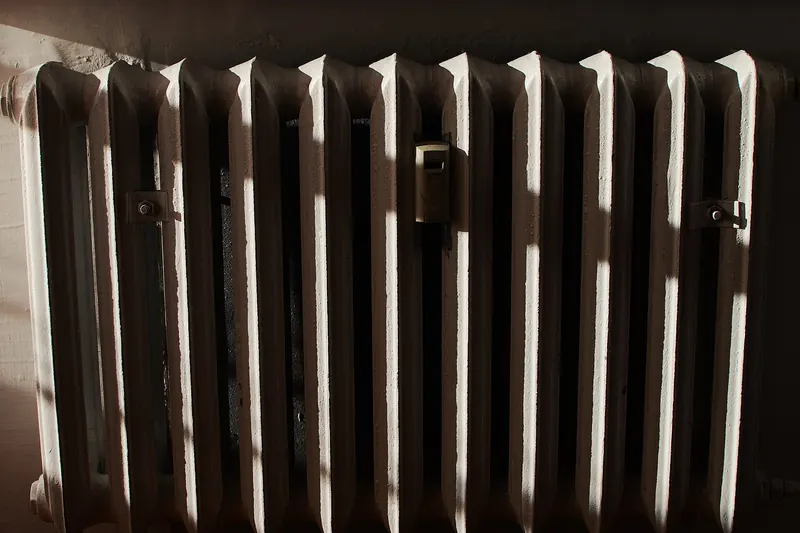
Before calling anyone out, put a hand flat on the cold radiator with the heating on and feel where the cold patch is. That one check tells you most of what an engineer would ask first, and two of the three common causes are easy to sort or at least to describe clearly.
Boiler makers' own advice lines up on this. Vaillant says radiators that are hot at the bottom but cold at the top suggest air trapped in the system, while Worcester Bosch says a radiator cold at the bottom is usually caused by a build-up of sludge or poor circulation.
Is it cold at the top?
That is almost always air, and bleeding the radiator usually fixes it. Vaillant's steps are: switch the heating off and let the radiators and pipes cool fully, fit a radiator key to the bleed valve, open it slowly (a quarter turn should be enough), listen for the hiss, let a little water out, then close it. Keep a cloth and a dish under the valve.
Afterwards, check the boiler pressure gauge. Vaillant says to check whether it is below 1 bar after bleeding, and to top up as your boiler's manual describes. If there is no gauge at all, or radiators keep needing bleeding, mention it at the next service.
Is it cold at the bottom?
Sludge settling in the bottom of the radiator is the likely cause. Bleeding will not shift it. Vaillant says that if radiators still feel cold after bleeding, the system may need flushing, which must be done by a heating engineer. Baxi notes that a magnetic filter captures these particles and stops them reaching the boiler, which is worth asking about at the same visit.
Is it cold all over?
Check that both valves at the ends of the radiator are open. Baxi says that on a thermostatic valve you can take the head off to see whether the pin still moves up and down; if it is stuck down, no hot water gets in. If you are not confident doing that, Baxi's advice is to call a heating engineer.
If the furthest radiators from the boiler are the cool ones, the system may need balancing, which Vaillant mentions as part of setting up radiators. A heating engineer can do this in one visit.
Could it be the boiler?
If several radiators are cold, or the boiler shows a fault, it is a boiler question, not a radiator one. On an oil boiler, leave the burner, fuel line and controls to an OFTEC-registered technician (see who should service the oil boiler); on LPG, call a Gas Safe registered engineer. If you are on a heat pump, Home Energy Scotland's heat pump guide lists bleeding radiators and checking the heating loop pressure among routine checks.
Safety first
Let the heating cool before you bleed a radiator: the water inside can be scalding. Don't open or adjust anything on the boiler itself beyond the pressure top-up your manual describes.
What to look at first
- Where the cold patch is: top, bottom or everywhere.
- Whether both valves on that radiator are open.
- The boiler pressure gauge reading, if you have one.
- Whether other radiators are slow too, especially the furthest ones.
- Gurgling in the pipes, which points to air.
Yours to do, and theirs
You can
- Bleed the radiator once the heating has cooled.
- Top up boiler pressure following your boiler's manual.
- Check the valves are open and the thermostatic valve head turns freely.
Leave to them
- A heating engineer flushes sludge and balances the system.
- An OFTEC-registered technician (oil) or Gas Safe registered engineer (LPG) deals with boiler faults.
| Where it is cold | Likely cause | What to do |
|---|---|---|
| Top | Trapped air | Bleed the radiator, check pressure |
| Bottom | Sludge | Ask a heating engineer about flushing and a filter |
| All over | Valve shut or pin stuck | Check valves; engineer if unsure |
| Furthest rooms | System not balanced | Heating engineer balances it |
In short
Feel where the radiator is cold. Top means air, which you can usually bleed yourself once it has cooled; bottom means sludge, which needs a heating engineer; cold all over often means a closed valve or stuck pin.
Also asked about this
Why does the same radiator keep needing bleeding?
Air keeps getting in or forming somewhere in the system. Mention it at the next service rather than bleeding it every week.
Is it safe to leave a radiator cold over winter?
In an exposed house a cold room raises the risk of frozen pipes, so get it looked at; see how do we stop pipes freezing in an exposed house.
Are thermostatic radiator valves worth having?
Home Energy Scotland lists thermostatic radiator valves among the standard heating controls worth having if you have radiators.
Should a new heat pump system have a magnetic filter?
Ask your MCS installer what water treatment and filtering their design includes; see should we swap the oil boiler for a heat pump.