Asked about the pipes in winter
What do we do the moment a pipe bursts?
Answered by Asked in Ayrshire · Updated · Sources at the foot
When a pipe bursts, turn off the stopcock straight away, keep away from any electrics the water has reached, switch off the boiler and water heater, then open the taps to drain the system.
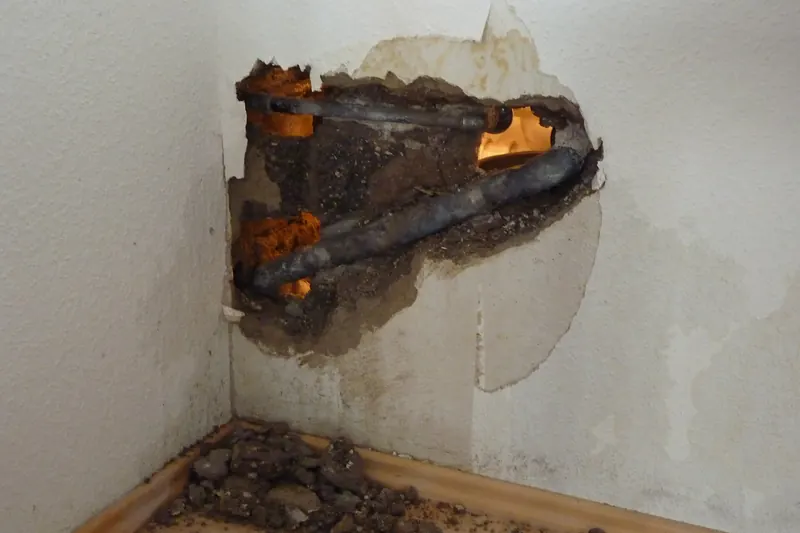
Burst pipes in Ayrshire usually show up during a thaw rather than the freeze itself: the ice splits the pipe, and the leak starts when it melts. In a house with a loft tank, water can come through a ceiling fast, so the order you do things in matters.
Have the stopcock found and tested before winter, lag the cold runs, and keep a torch and some old towels where you can grab them. The steps below follow the published advice from the Met Office and Ayrshire councils.
What do we do first?
Turn off the water at the stopcock first. East Ayrshire Council's advice is to turn off the water at the main stopcock immediately, and the Met Office says to turn off the supply at the stop tap and switch off your boiler.
If yours will not move, or you cannot find it, see where the stopcock is in an old farmhouse. On a private spring or borehole supply, switch off the supply pump as well, if you can reach its switch safely.
What if water is near the electrics?
Keep away from sockets, switches and light fittings that water has reached, and don't touch them. The Met Office says that if water has leaked near your electrics, do not touch them and switch them off at the fuse box.
Only go to the consumer unit if it is dry and you can reach it without standing in water or passing wet fittings. If it is in the wet area, or you are unsure, stay clear and call an electrician. Have the wiring checked before you use anything that got wet.
How do we drain the system?
Once the stopcock is off, open the taps to empty the pipes. The Met Office says to open all your taps to drain the system as quickly as possible, saving some water in a bucket for flushing toilets and hand washing. North Ayrshire Council adds that this may take about 15 minutes.
East Ayrshire Council also suggests flushing the WC, catching the leak in a bowl or other container, and warning any neighbours who may be affected. Soak up what you can with towels to limit the damage.
The boiler, water heater and fires
Switch off the boiler and any immersion or water heater so they do not run with empty pipes.
If you smell gas or LPG at any point, don't use switches or flames, open doors and windows, get everyone out, then call from outside: the National Gas Emergency Service on 0800 111 999 for mains gas, or for LPG the supplier's emergency number on the tank or bill.
Who repairs it?
A temporary clamp or bandage can slow a small leak, but the permanent repair is for a qualified plumber. The Met Office recommends a WaterSafe approved plumber, and the Drinking Water Quality Regulator's WaterSafe page says approved contractors are trained in the water fittings rules and byelaws and give a "work completed" certificate.
If the burst is outside, between the boundary and the road, it may be Scottish Water's pipe rather than yours; see who owns the water pipe to our house. Tell your insurer as soon as you can and take photographs before you clear up.
What to look at first
- The stopcock: fully off.
- Electrics: is water near sockets, switches, lights or the consumer unit?
- Boiler, immersion and water heater: switched off.
- Taps opened and the WC flushed to drain the pipes.
- Ceilings below a loft tank: any sagging or bulging.
Yours to do, and theirs
You can
- Turn off the stopcock and drain the system through the taps.
- Switch off the boiler and water heater, and catch or mop up the water.
- Switch off at the consumer unit only if it is dry and safe to reach.
Leave to them
- The permanent pipe repair is for a qualified plumber (WaterSafe lists approved ones).
- Wet wiring, sockets or light fittings are for an electrician to check before use.
- A burst on the public side of the boundary is for Scottish Water.
| Step | What to do | Why |
|---|---|---|
| 1 | Turn off the stopcock | Stops more water coming in |
| 2 | Keep clear of wet electrics | Risk of shock |
| 3 | Switch off boiler and water heater | Protects them from running dry |
| 4 | Open taps and flush the WC | Drains water left in the pipes |
Safety first
Never touch sockets, switches or light fittings that water has reached. If a ceiling is bulging with water, keep everyone out from under it.
In short
Stopcock off first, then stay clear of wet electrics, switch off the boiler and water heater, and drain the taps. Leave the permanent repair to a qualified plumber and have any wet wiring checked.
Also asked about this
Should we fit isolating valves on each branch?
Small quarter-turn isolating valves let you shut off one tap or appliance without turning the whole house off. A plumber can fit them while the system is drained.
Is a burst pipe under the garden our job or Scottish Water's?
It depends on which side of the boundary stopcock it is. The supply pipe on your side is usually the owner's responsibility.
Can we put the water back on with a temporary clamp?
Only to a small, accessible leak and only until a plumber can make a permanent repair. Keep checking it.
What if the burst is in the loft tank?
Turn off the stopcock and drain the cold taps to lower the level in the tank. Keep out from under any bulging ceiling.
Sources, checked 5 November 2026
- Met Office — What to do if you have a frozen or burst pipe
- East Ayrshire Council — Home emergencies and frost precautions
- North Ayrshire Council — Cold weather advice for tenants
- Drinking Water Quality Regulator for Scotland — WaterSafe scheme: find an approved plumber
- Drinking Water Quality Regulator for Scotland — Lead in drinking water: understanding supply pipes (leaflet, June 2021)