Asked about the pipes in winter
Where is the stopcock in an old farmhouse?
Answered by Asked in Ayrshire · Updated · Sources at the foot
The stopcock in an old farmhouse is usually where the water pipe comes into the house, often under the kitchen sink, but in older and extended houses it can be in a porch, under a floor or in an outbuilding.
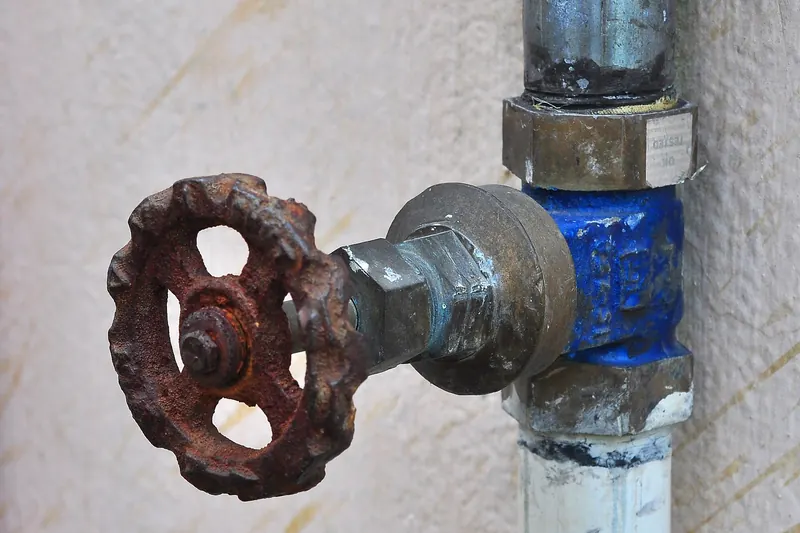
Most houses have two valves on the incoming water: one outside, usually near the boundary, and one inside that you control. The inside one is the one to find first, because it is what you shut off in a burst or before thawing a frozen pipe.
In an old Ayrshire farmhouse, the kitchen may have moved, the house may have been extended, and the pipe may come in from a field rather than the road. That is why the stopcock is often not where you would expect.
Where do we start looking?
Start where the water pipe enters the house. North Ayrshire Council says the stop tap will be where the water pipe enters the house, usually under the kitchen sink or in the bathroom. The Met Office says it is usually under the kitchen sink but can also be found in downstairs bathrooms.
Look at the back of the cupboard under the sink for a pipe rising out of the floor with a tap-style handle or a lever on it. Follow that pipe up: the first valve on it is usually the one.
What if it is not under the sink?
If the kitchen has been moved, follow the pipes back from it towards the oldest part of the house. In farmhouses the stopcock can turn up in a back porch or scullery, under the stairs, in a cupboard on an outside wall, or under a lifting floorboard or hatch near the old back door.
In steading conversions it can be in what used to be a byre or store, now a utility room or garage. Look for a pipe coming up through a concrete floor, often with an older lead or iron section below a newer copper or plastic one. If you see dull grey pipe, read whether we still have lead pipes.
Is there a stopcock outside too?
Usually, yes. Responsibility on the public mains is split at the boundary stopcock: Scottish Government guidance on the Repairing Standard describes Scottish Water as responsible for the communication pipe up to the boundary stopcock, and the owner for everything from there into the house.
On a farm, that boundary valve may be by the road end of a long track, under a small metal cover in the verge. Treat it as the edge of Scottish Water's side; the inside stopcock is the one for you to use. More on that split is in who owns the water pipe to our house.
What if we are on a private supply?
Then there may be no public stopcock at all. The inside valve still matters, but you may also have a valve at the tank, filter or pump house, and a switch for the pump. Label them all. The water supply section covers private supplies in more detail.
Check it works, and label it
Once found, turn it off and back on to check it moves. The Met Office says to check your stop tap is working every six months, and East Ayrshire Council tells tenants to find out now where the stopcock is.
If it is stiff, don't force it with a wrench; an old valve can snap or start leaking at the spindle. Ask a plumber to replace it with a modern valve, ideally before winter. Tie a label on it and tell everyone in the house, including anyone who looks after the place while you are away.
What to look at first
- The cupboard under the kitchen sink: a pipe rising from the floor with a valve.
- Downstairs bathroom, back porch, scullery and under the stairs.
- Lifting boards or hatches near the old back door.
- Utility rooms or garages in a converted steading.
- The road end of the track, for a small cover marking the boundary valve.
Yours to do, and theirs
You can
- Find the inside stopcock, label it and turn it off and on twice a year.
- Note any boundary cover and the valves on a private supply.
Leave to them
- Replacing a seized or weeping stopcock is for a qualified plumber (WaterSafe lists approved ones).
- The boundary stopcock and the communication pipe on the public side are Scottish Water's.
| Place | What to look for | Notes |
|---|---|---|
| Under the kitchen sink | Pipe rising from the floor with a valve | The usual spot, per the Met Office and North Ayrshire Council |
| Back porch or scullery | Valve low on an outside wall | Common where the kitchen has moved |
| Under a floor hatch | Valve below boards near the old back door | Lift carefully; check for lead pipe |
| Steading utility room or garage | Pipe up through a concrete floor | Often a newer valve on an older pipe |
In short
Start where the water pipe enters the house, usually under the kitchen sink, then follow the pipes back through porches, floors and old outbuildings. Once you find it, test it, label it and get a stiff one replaced before winter.
Also asked about this
How do we tell the main stopcock from a small isolating valve?
The main stopcock is on the pipe where it first enters the house, before any branches. Isolating valves sit on single branches, close to one tap or appliance.
Can we turn off the boundary valve ourselves?
It marks the edge of Scottish Water's side of the supply, so use the inside stopcock. If the inside one fails in a burst, ask Scottish Water.
Our stopcock drips when we turn it. Is that a problem?
A drip at the spindle usually means worn packing. Ask a plumber to look at it before you need it in a hurry.
What if two houses share one stopcock?
Then turning it off cuts water to both. Talk to the neighbours and agree what to do in a burst, and check the title deeds for shared pipes.
Sources, checked 5 November 2026
- North Ayrshire Council — Cold weather advice for tenants
- Met Office — What to do if you have a frozen or burst pipe
- Scottish Government — Repairing Standard statutory guidance, Annex D1: installations for the supply of water
- East Ayrshire Council — Home emergencies and frost precautions
- Drinking Water Quality Regulator for Scotland — WaterSafe scheme: find an approved plumber