Asked about the heating
Will a heat pump work in an old stone cottage?
Answered by Asked in Ayrshire · Updated · Sources at the foot
A heat pump can work in an old stone cottage, but only when it is designed for that house: sized from a proper heat calculation, run at low water temperatures, with the loft and draughts sorted first.
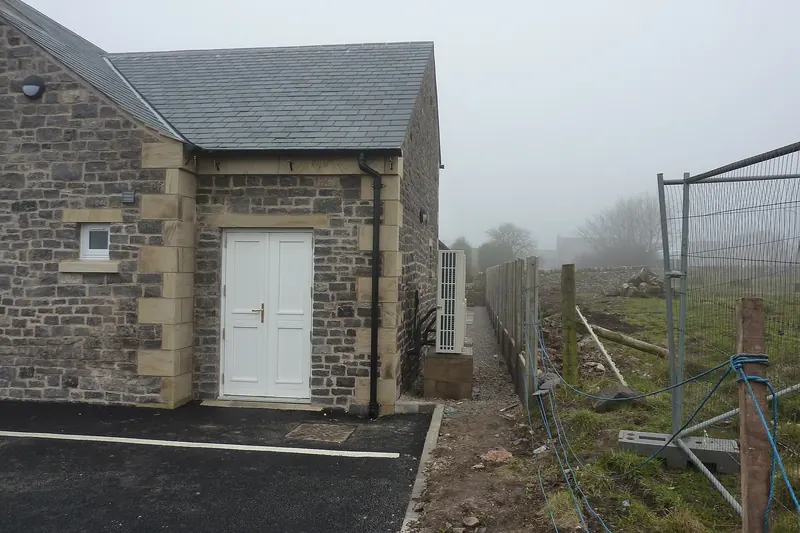
Thick rubble walls, small windows and a draughty back door are normal in Ayrshire cottages, and they are often why people assume a heat pump is out of the question. The official guidance is more hopeful than that. Historic Environment Scotland's short guide on air source heat pumps in traditional buildings (updated September 2025) says they can work efficiently even in buildings with high heat demand, provided they are carefully designed and specified.
Home Energy Scotland makes the same point in its heat pump myths page, saying there are many examples of heat pumps running successfully and cost-effectively in older properties. The catch is in the word "designed". A heat pump bought on price and fitted like a boiler is the version that disappoints.
Does a stone cottage lose too much heat for a heat pump?
Not automatically; it means the heat pump and radiators have to be sized for a bigger heat loss. Home Energy Scotland's installation checklist says every quote should explain how the installer calculated your property's heat demand. If a quote cannot tell you that, it has guessed.
Wind matters on an exposed hill farm or a seafront in Girvan, because draughts carry warm air straight out. Home Energy Scotland describes insulation and draught-proofing as the first step to a cosy home whatever the heating system.
Do we need bigger radiators or underfloor heating?
Not always. Home Energy Scotland says neither underfloor heating nor oversized radiators are essential, and that an installer can advise when upgrading is not practical. What changes is the water temperature: a heat pump works most efficiently delivering cooler water than a boiler, so some rooms may need a larger radiator to stay comfortable.
In a cottage with deep window reveals there is not always wall space for a bigger radiator, so ask the installer to show room by room which radiators stay and which change.
What insulation has to be done first?
For funding, Home Energy Scotland's checklist says the home must have adequate loft and cavity wall insulation to claim the Home Energy Scotland Grant and Loan. Solid wall and floor insulation are not required for the grant, though the guide suggests looking into them. Most old stone cottages have no cavity, so the loft is usually the part that counts.
Insulating solid stone walls is a specialist job because of how old walls handle moisture, which ties in with damp in houses near the sea. Get advice before anyone lines the walls.
How does it cope with a cold Ayrshire winter?
Home Energy Scotland says air source heat pumps lose some efficiency in very cold air, but notes that Scotland's winters are mild compared with other countries that use many of them. Coastal salt air is a separate worry for the outdoor unit, covered in does salt air damage a heat pump.
Heat pumps also prefer to run steadily. Home Energy Scotland's guide to living with a heat pump suggests leaving it on, with a setback of about 5°C overnight or when out, rather than switching it off.
What to look at first
- Loft: is there insulation, and roughly how deep?
- Draughts: doors, sash windows, open chimneys and gaps around pipes.
- Radiators: count them and note which rooms already feel cold.
- Space: a spot outside for the unit, away from bedroom windows, and room inside for a hot water cylinder.
- Listed or conservation area: check with the council planning team before choosing a spot for the unit.
Yours to do, and theirs
You can
- Top up loft insulation and draught-proof doors and windows.
- Ask Home Energy Scotland for free advice and a home energy report before getting quotes.
- Compare at least three quotes, each with a written heat demand figure.
Leave to them
- An MCS certified installer designs and fits the heat pump, radiators and cylinder.
- Council planning and building standards teams answer listed building, planning and warrant questions.
| Item | Why it matters | Who checks |
|---|---|---|
| Loft and cavity insulation | Needed to claim the grant | Home Energy Scotland energy report |
| Heat demand calculation | Sizes the pump and radiators | MCS installer |
| Radiator sizes | Cooler water needs more surface | MCS installer |
| Outdoor unit position | Noise, airflow, salt spray | Installer and council planning team |
In short
A stone cottage is not a reason to rule out a heat pump. Sort the loft and draughts, insist on a written heat calculation and radiator plan, and use an MCS installer so the grant is open to you. If you are weighing this against your existing boiler, read should we swap the oil boiler for a heat pump.
Also asked about this
Can a heat pump heat a cottage with no insulation at all?
It can be sized to, but it will be larger and dearer to run. Home Energy Scotland treats insulation and draught-proofing as the first step, and loft insulation is a grant condition where there is a loft.
Will a heat pump make the walls of an old cottage damp?
The heat pump itself does not add moisture. Damp in old walls comes from other causes, such as condensation, leaks and blocked drainage, which are worth fixing first.
Do we need to keep the open fire?
That is your choice, but an open chimney is a big draught. Talk to the installer about whether a chimney balloon, a stove or blocking the flue makes sense, and keep a carbon monoxide alarm in any room with a fuel-burning appliance.
How often does a heat pump need servicing?
Home Energy Scotland says to have it serviced annually by a certified heat pump engineer, and to keep the outdoor unit's fins free of leaves and debris.