Asked about damp and the sea air
Why is our house by the sea so damp?
Answered by Asked in Ayrshire · Updated · Sources at the foot
A house by the sea is often damp because moist air meets cold walls and windows, wind-driven rain soaks exposed gables, and salts in old stonework draw in moisture, especially in rooms heated only now and then.
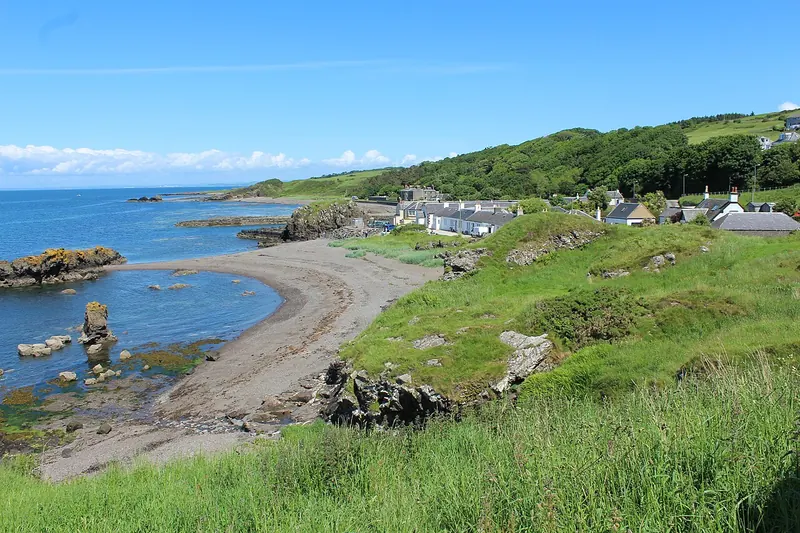
Coastal Ayrshire houses take the weather first: westerly wind off the Firth of Clyde, rain driven sideways onto gable ends, and air that rarely feels dry. Many are also built of solid stone or old brick, which behaves very differently from a modern cavity wall.
Damp in these houses usually has more than one cause at once. The useful thing is to work out which one is doing most of the harm before spending money, because the fixes differ.
Is the sea air itself the problem?
Partly. A heat pump maker's coastal installation note from Mitsubishi Electric describes the high humidity common to coastal areas and how onshore winds carry both salt and moisture inland. The same salt-laden air is why outdoor equipment near the shore needs care, as does salt air damage a heat pump explains.
Home Energy Scotland explains that condensation happens when there isn't enough air movement and moisture forms on cold surfaces. Cold window reveals, the backs of wardrobes on outside walls and unheated bedrooms are the usual places.
Why are the gable walls worst?
Gables are often the most exposed part of a house, and they take the brunt of driving rain. Historic Environment Scotland's guide to damp gables says that with increasing rainfall in Scotland, damp gables are becoming a common problem, and that poor maintenance and unsuitable repairs can make it worse.
Rain getting through a wall is called penetrating damp. If patches seem to grow after a wet, windy spell, rain coming in is a likely suspect; the guide covers gables and chimneys.
What about salt in the walls?
Old walls near the sea can hold salts. The Scottish Government's guidance on traditional buildings notes that hygroscopic, or water-attracting, materials such as salts can draw moisture into a building.
The same guidance warns that inserting barriers to stop rising damp in thick masonry often doesn't work and, by concentrating moisture and salts, can restrict drying. It says the most common cause of damp at the base of traditional walls is defective ground drainage, including ground levels raised against the wall over the years.
Does heating the house help?
Yes, steady heating helps. The same guidance notes that a building heated only now and then is significantly more likely to suffer condensation. Home Energy Scotland suggests keeping the home heated to at least 15°C where possible in colder months.
For a holiday cottage or a house left empty, see how to look after a cottage left empty over winter.
What helps most?
For more on this part of the house, see damp and the sea air. Start with the cheap, safe steps: dry washing outdoors where you can, use extractor fans, open trickle vents, and leave a gap between furniture and outside walls, all of which Home Energy Scotland suggests. Then look at the outside: gutters, downpipes, ground levels and cracked render.
Historic Environment Scotland advises using materials that let moisture move through the walls of traditional buildings and keeping enough ventilation when draught-proofing. If you can't tell condensation from other damp, read is it condensation or rising damp.
What to look at first
- Where the damp is: window corners and wardrobe backs, or low on the wall, or high on a gable?
- Whether it gets worse after windy rain or after cooking and showers.
- Gutters, downpipes and the ground level against the outside walls.
- Whether patches change after a dry spell.
- Which rooms are heated and which are left cold.
Yours to do, and theirs
You can
- Dry washing outside where possible and run extractor fans when cooking or bathing.
- Keep rooms steadily warm and leave a gap behind furniture on outside walls.
- Clear leaves from gutters you can reach safely from the ground.
Leave to them
- Repairs to render, pointing, roofs or chimneys are for a builder used to traditional buildings.
- A damp survey on an old stone house is for a surveyor with traditional building experience.
| Kind of damp | Where it shows | What usually helps |
|---|---|---|
| Condensation | Cold windows, corners, behind furniture | Steady heat, ventilation, less moisture indoors |
| Penetrating damp | Exposed gables, round chimneys and cracks | Repairing gutters, render, pointing and flashings |
| Salts in the wall | Damp drawn in by water-attracting salts | Diagnosis before treatment; breathable materials |
| Ground moisture | Base of walls | Ground drainage and lowering raised ground |
In short
Sea air, driving rain on exposed gables, salts in old stone and rooms left cold all add to damp in coastal houses. Steady heat and good ventilation help with condensation, and outside repairs help with rain getting in. Get a proper diagnosis before paying for damp-proofing.
Also asked about this
Will chemical damp-proofing fix a damp stone wall by the sea?
The Scottish Government's guidance says injected damp-proof courses in solid masonry are usually found to be ineffective, so get the cause diagnosed first.
Is black mould on the bedroom wall a health risk?
Home Energy Scotland notes that black mould can affect the health of the people living in a home, so deal with the cause and not just the stain.
Should we draught-proof every gap to keep the heat in?
Historic Environment Scotland advises keeping enough ventilation when you draught-proof, which helps prevent damp and decay.
Can Home Energy Scotland help with damp?
Its advisers can talk through ways to make a home warmer and drier on its free advice line, 0808 808 2282.
Sources, checked 5 November 2026
- Home Energy Scotland — Make your home warmer
- Scottish Government — Conversion of traditional buildings: guidance, 3.15 Condensation
- Scottish Government — Conversion of traditional buildings: guidance, 3.4 Moisture from the ground
- Historic Environment Scotland — Inform Guide: Damp Gables
- Historic Environment Scotland — Traditional buildings
- Mitsubishi Electric — Ecodan coastal protection models (-BS) product information