Asked about the water supply
Why is our spring water brown after heavy rain?
Answered by Asked in Ayrshire · Updated · Sources at the foot
Spring water usually turns brown after heavy rain because the rain washes peaty organic matter from the hill into the source, and that colour can stop UV treatment working properly.
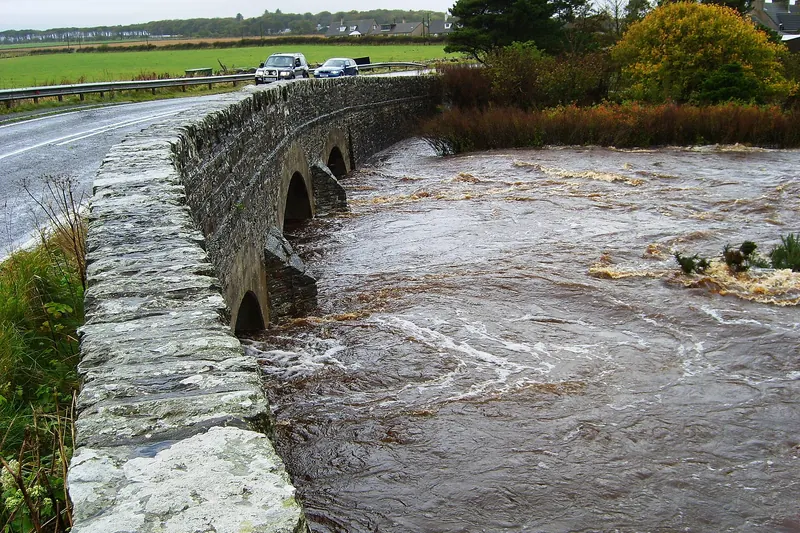
On Ayrshire's upland farms the pattern is familiar: a wet night, then a bath that looks like weak tea. The colour itself is not usually the danger. The trouble is what tends to arrive with it.
Rain that is strong enough to stain the water is also washing soil, animal droppings and anything else on the catchment into the source. That's why brown water after a storm deserves a call to the council rather than a shrug.
What makes the water brown?
Mostly peat. The Drinking Water Quality Regulator's guidance on colour says colour comes mainly from naturally occurring organic acids from peaty soils, with humic and fulvic acids common. It adds that after heavy rainfall a supply may well be highly coloured, so a sample that passed one week can fail the next.
The legal standard for colour is 20 mg/l Pt/Co. The compounds behind it are of no direct health significance, but they matter for treatment.
Is brown water a health risk?
It can be, indirectly. East Ayrshire Council warns that the risk of harmful bacteria rises after heavy rainfall or snowmelt and when the water is highly coloured.
Colour also weakens UV disinfection. The regulator's UV guidance says that if there is any visible colour at all, water is unlikely to be suitable for UV treatment, and turbidity needs to be below 1 NTU. So on a stormy day the lamp may be shining on water it can't properly treat; our UV page explains why pre-filters matter.
What should we do when it happens?
Follow any advice the council has given you, exactly as written. If you are unsure whether the water is safe, the cautious route is to use boiled or bottled water for drinking, ice, brushing teeth and preparing food until you've spoken to environmental health.
Note when it started, how long it lasted and what the weather did. That record helps the council decide what to sample and when, as explained on who tests a private supply. mygov.scot says to contact the council's environmental health department if the supply is disrupted and you can't identify the problem.
Can treatment cope with the colour?
Yes, with the right equipment in the right order. The regulator lists granular activated carbon and ion exchange "organic scavenger" resins as ways to remove the organic compounds, each needing correct sizing and regular replacement or regeneration.
mygov.scot advises that choosing treatment is best left to a specialist, and the private supply grant can help pay for it. Keeping animals away from the source and fitting well-sealed tank covers also helps reduce what gets washed in.
What to look at first
- Is the colour only after rain, or all the time?
- Is the UV lamp's alarm or indicator showing a fault?
- Are the sediment filters visibly dirty or blocked?
- Is the collection tank cover in place and the fence intact?
- Has anything changed on the catchment, such as ploughing, forestry work or new livestock?
Yours to do, and theirs
You can
- Use boiled or bottled water for drinking until you have spoken to the council.
- Photograph the water and note dates and rainfall.
- Change dirty filter cartridges as the maker describes, and keep spares.
Leave to them
- The council's environmental health team samples the supply and advises.
- An accredited lab tests for bacteria, colour and turbidity.
- A water treatment specialist adds carbon or resin treatment ahead of the UV.
| What you notice | Likely cause | Who to involve |
|---|---|---|
| Tea-coloured water for a day or two after rain | Peaty organic acids | Council, to sample at the right time |
| Cloudy or gritty water | Soil and sediment in the source | Check filters, then the council |
| Colour plus a UV fault light | Treatment not coping | Specialist, and the council |
| Colour all year round | Peaty catchment | Specialist to size carbon or resin treatment |
Safety first
Coloured water can carry bacteria that UV is not killing. Until the council says otherwise, use boiled or bottled water for drinking and food, and follow any council notice exactly.
In short
Brown water after rain is usually peat washed into the source. The colour itself is not toxic, but it travels with run-off that can carry bacteria and it stops UV working well, so tell the council and drink boiled or bottled water until you know.
Also asked about this
Is iron the cause rather than peat?
It can be. Iron and manganese also reduce UV effectiveness, according to mygov.scot, and only a lab test will tell you which you have.
Why does the water clear after a day or two?
As the rain stops, less run-off reaches the source and the organic load falls. The regulator notes colour can vary widely with rainfall.
Does forestry work nearby matter?
The regulator's filter guidance warns that ploughing near the source can quickly clog filters, so tell the council about any big change on the catchment.
Will a jug filter make it safe?
No. A jug filter is not disinfection. Follow the council's advice on boiling or an alternative supply.
Sources, checked 5 November 2026
- Drinking Water Quality Regulator for Scotland — Colour
- Drinking Water Quality Regulator for Scotland — Disinfection by UV radiation
- Drinking Water Quality Regulator for Scotland — Physical filters
- East Ayrshire Council — Private water supplies
- mygov.scot — Treating a private water supply
- mygov.scot — Reporting problems with a private water supply
- mygov.scot — Maintaining a private water supply