Asked about the septic tank
What can go down the drain when you have a septic tank?
Answered by Asked in Ayrshire · Updated · Sources at the foot
With a septic tank, only toilet waste, toilet paper and household washing water should go down the drain; fats, oils, chemicals, wipes and rainwater all cause trouble.
A septic tank is a living system. Bacteria in the tank break down sewage, solids settle as sludge, and the liquid goes on to a soakaway or outfall. Anything that kills those bacteria, floats, or overloads the tank with water upsets the balance.
The rules are simple, and they're the same for a farm cottage near Dalmellington and a coastal bungalow outside Girvan. The Technical Handbook even expects new systems to carry a label in the house stating that the owner is legally responsible for routine maintenance.
What does SEPA say should go in?
Only toilet waste and washing water. SEPA's maintenance guidance says not to dispose of grease, oil or chemicals in the system, to use only cleaning products that are safe for it, and to keep rainwater and run-off out.
SEPA's main septic tank page adds avoiding flushing fats, oils or non-biodegradable items. That rules out wipes, sanitary products, cotton buds and cooking fat.
Why is rainwater a problem?
Extra water rushes through the tank before solids can settle and floods the soakaway. SEPA warns that rainwater and run-off getting in can cause a pollution incident.
On older Ayrshire farmhouses, roof downpipes and yard gullies were sometimes plumbed into the same drain. If the tank fills fast after rain, ask a drainage contractor to trace where the surface water goes. Our page on a failing soakaway explains the knock-on effects.
What about household cleaners and medicines?
SEPA's advice is to use only cleaning products that are safe for the system and to keep chemicals out. In practice that means choosing products labelled as suitable for septic tanks, using them sparingly, and keeping drain unblockers, solvents, paint and white spirit out of sinks and toilets altogether.
What leaves the tank still has to meet SEPA's standard conditions, including no significant impact on any drinking water supply, so what goes in matters downstream too.
Can a garden or kitchen sink cause trouble?
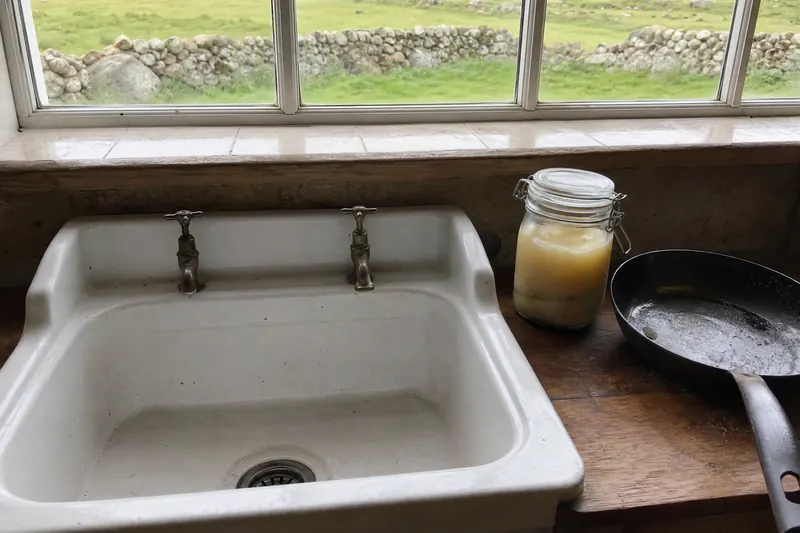
Yes. Fat poured down the sink sets in pipes and floats in the tank, and food waste adds to the sludge. Scrape plates into the bin, wipe greasy pans with kitchen paper first, and don't fit a waste disposal unit without checking with whoever services your system.
Spreading washing machine and dishwasher loads through the week, rather than all on one day, helps the tank settle. Keeping to these habits also helps reduce how often you need to empty the tank, and protects the SEPA registration conditions that require the system to stay fully functioning.
What to look at first
- Are roof downpipes or yard drains feeding the tank?
- Which cleaning products are under the sink?
- Does anyone flush wipes or sanitary products?
- Is cooking fat going down the kitchen sink?
- When was the tank last emptied?
Yours to do, and theirs
You can
- Put a small notice in bathrooms listing what can and can't be flushed.
- Switch to cleaning products suitable for septic tanks.
- Bin fats, wipes and food scraps rather than flushing or rinsing them away.
Leave to them
- A drainage contractor traces and diverts surface water away from the tank.
- An accredited service technician advises on a treatment plant's limits.
- A registered waste carrier empties the tank if it has been overloaded.
| Item | Down the drain? | Instead |
|---|---|---|
| Toilet waste, toilet paper and washing water | Yes | Normal use |
| Cooking fats and oils | No | Cool, then bin |
| Wipes, sanitary products and cotton buds | No | Bin |
| Bleach, solvents and drain unblockers | Avoid, or very sparingly | Septic-safe products |
| Roof and yard rainwater | No | Divert to a separate drain |
Safety first
If a drain blocks, call a drainage contractor rather than trying to clear it at the tank. Never open, enter or lean into a septic tank or chamber. Look only from the ground at what is already visible, such as pooling over the soakaway, slow drains or smells, and ask the licensed carrier or service technician to check inside. Gases inside can overcome you quickly.
In short
Only toilet waste, toilet paper and washing water should go in. Keep out fats, oils, chemicals, wipes and rainwater, use septic-safe cleaners, and the tank will work better and need fewer emergency visits.
Also asked about this
Is it safe to use a dishwasher with a septic tank?
Yes, in normal use. Spread loads out and choose detergents suitable for septic systems.
Can a water softener drain into the septic tank?
Check with the softener maker and whoever services your tank, since regeneration water adds volume and salt.
Can holiday guests cause problems?
A full house adds load quickly. Leave clear guidance in the bathroom and kitchen, and consider emptying more often.
What about a treatment plant rather than a septic tank?
The same rules apply, and SEPA says to follow the maker's instructions. See our page comparing the two.
Sources, checked 5 November 2026
- SEPA — Maintaining your private sewage treatment system
- SEPA — Septic tanks and private sewage treatment systems
- SEPA — Existing sewage discharge authorised by a CAR registration on 31 October 2025
- Scottish Government — Technical Handbook (Domestic), April 2026, 3.8 Private wastewater treatment systems, treatment plants
- mygov.scot — Private sewerage