Asked about the septic tank
Do I need to register my septic tank with SEPA?
Answered by Asked in Ayrshire · Updated · Sources at the foot
Yes, you need to register your septic tank discharge with SEPA; registrations held on 31 October 2025 carried over automatically to the new rules, and an unregistered tank needs an application now.
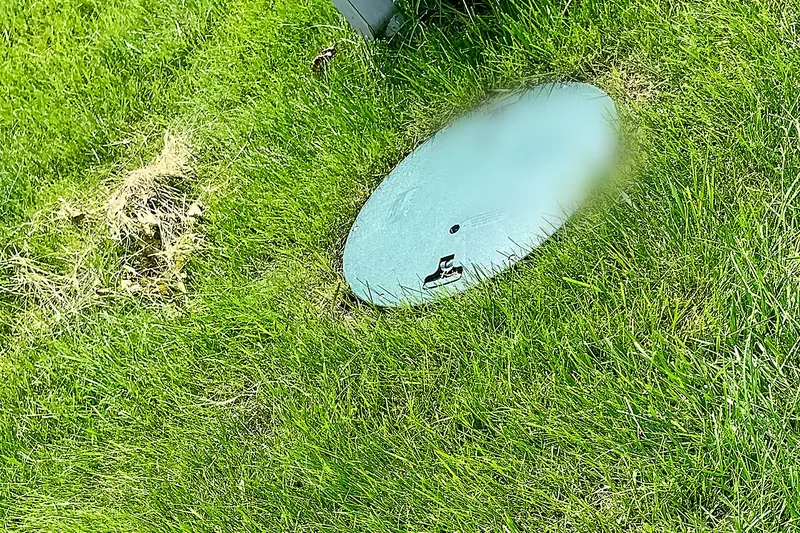
If your house drains to a septic tank or treatment plant rather than a public sewer, the water leaving it is a discharge to the environment, and mygov.scot says you need an authorisation from SEPA for it.
The rules changed on 1 November 2025, when SEPA moved water activities onto the Environmental Authorisations (Scotland) Regulations 2018, usually shortened to EASR. For most households with an existing registration, nothing needed doing on the day, though the tank still has to be emptied and kept working.
What changed on 1 November 2025?
SEPA's page for existing registrations says a CAR registration held on 31 October 2025 automatically became an EASR authorisation on 1 November 2025, without you needing to do anything.
It kept its old conditions until 1 March 2026, when SEPA's standard conditions applied automatically. These include keeping the treatment system and outfall pipe maintained so they are fully functioning, and making sure the discharge has no significant impact on any drinking water supply. SEPA states it is an offence not to comply. SEPA's current pages talk about registration and standard conditions rather than the old General Binding Rules wording.
What if our tank was never registered?
Then you should apply. SEPA's guidance for unauthorised discharges says a registration is only granted if you can confirm you can comply with the standard conditions, and SEPA won't authorise a discharge that poses an unacceptable risk to the environment.
SEPA's septic tank page gives the registration fee for a small sewage discharge as £198.55 (checked November 2026). Registration covers up to 10 domestic properties, or a mixed scheme up to 50 population equivalent; bigger systems, or discharges to a phosphate-sensitive catchment or freshwater loch, need a permit.
How do we check if ours is registered?
SEPA runs a septic tank registration check. Its contact page offers a form to request a check of whether your septic tank or private sewage treatment system is registered.
It's worth doing on an older Ayrshire farmhouse or steading conversion, where paperwork may have been lost over several sales. Avoid registering again if you're not sure: SEPA says it can't refund the fee if the discharge was already registered.
Do we need to tell SEPA about changes?
Some changes, yes. Adding a property, moving the outfall more than 10 metres, or switching from a soakaway to a burn needs a new registration. Replacing a tank like for like, or upgrading to a treatment plant, does not. Our page on septic tank or treatment plant covers upgrades, and selling the house covers transfers.
What to look at first
- Any SEPA registration letter or number in the house papers.
- Whether the outfall goes to a soakaway or a burn.
- How many houses share the tank.
- When it was last emptied, as part of keeping it working.
- SEPA's registration check, if you can't find the paperwork.
Yours to do, and theirs
You can
- Find any SEPA paperwork and keep it with the deeds.
- Use SEPA's online check if you're unsure the system is registered.
- Keep the tank emptied and the outfall working, as the standard conditions require.
Leave to them
- SEPA confirms registration and handles applications and changes.
- A licensed waste carrier empties the tank.
- A drainage contractor investigates a failing soakaway or outfall.
| Situation | What SEPA says | Action |
|---|---|---|
| Registered under CAR by 31 October 2025 | Became an EASR authorisation automatically | Comply with standard conditions |
| Never registered | Apply for a registration | Fee £198.55 for a small discharge |
| Up to 10 houses, or 50 p.e. mixed | Registration level | Apply through SEPA's online service |
| Over 10 houses or 50 p.e. | Permit needed | Contact SEPA |
Safety first
Never open, enter or lean into a septic tank or chamber. Look only from the ground at what is already visible, such as pooling over the soakaway, slow drains or smells, and ask the licensed carrier or service technician to check inside. Gases inside can overcome you quickly; keep children and pets well away.
In short
Every septic tank or treatment plant discharge needs SEPA authorisation. Existing registrations moved across automatically on 1 November 2025, standard conditions apply from 1 March 2026, and an unregistered tank needs an application.
Also asked about this
Does a shared tank need one registration or several?
SEPA asks for a registration for the discharge from each treatment system, so one shared tank usually means one registration covering the houses on it.
We're near a public sewer. Does that matter?
SEPA's guidance asks whether a sewer is within 30 metres per property served. If it is, the discharge counts as near the sewer, so ask SEPA what that means for your application.
Is it an offence to ignore the conditions?
Yes. SEPA states it is an offence not to comply with the conditions of an authorisation.
Who do we ask about a new tank on a building plot?
SEPA for the discharge, and the council's building standards team about the building warrant for the work.
Sources, checked 5 November 2026
- SEPA — Existing sewage discharge authorised by a CAR registration on 31 October 2025
- SEPA — Existing sewage discharge that does not have an authorisation
- SEPA — Septic tanks and private sewage treatment systems
- SEPA — Making a change to your private sewage registration
- SEPA — Private sewage treatment system registration guidance
- SEPA — Contact SEPA
- mygov.scot — Private sewerage