Asked about the oil tank
How long does a plastic oil tank last?
Answered by Asked in Ayrshire · Updated · Sources at the foot
A plastic oil tank lasts around 20 years, the expected working life OFTEC gives for fuel tanks, though the risk of failure rises with age and a yearly inspection tells you more than the date.
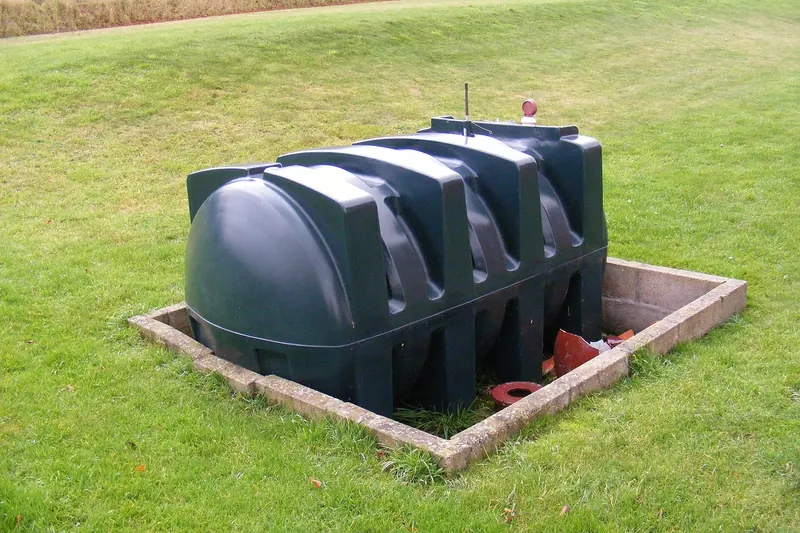
Most kerosene tanks in Ayrshire gardens are green or black plastic, and many were fitted when the house first went onto oil. If yours has no date on it and nobody remembers it going in, treat its age as unknown and let the next service decide.
Plastic tanks fail differently from steel ones. Steel tends to rust through, often at the base; plastic tends to split, bulge or crack, which can let a lot of oil out at once.
What does OFTEC say about tank life?
OFTEC's guide to liquid fuel heating says fuel tanks have an expected working life of around 20 years, with the risk of a costly failure rising with age. It says the tank should be inspected every year as part of the annual heating service, and that the technician will advise when it is time to replace it.
OFTEC's advice on tank checks adds that if a tank is over 20 years old, you should seek advice on whether it is time for a replacement. Twenty years is a prompt to ask, not an expiry date.
What wears a plastic tank out?
SEPA's guide to domestic oil spills says plastic tanks can split through an inherent defect or through age and wear and tear.
An exposed coastal or hilltop site in Ayrshire gets plenty of wind and weather, so a tank in the open deserves a closer look after a winter storm. OFTEC recommends a visual check between services, especially after extreme weather.
What signs should we look for?
OFTEC suggests looking for cracks, splits, bulging or discolouration on a plastic tank, oil stains or damp patches round the base and pipework, damaged pipes or loose connections, and a fuel sensor that is not fitted tightly. Look from the ground; don't climb onto the tank or lean on the lid.
SEPA's guide suggests a monthly look at the tank, noting any sudden drop in level, and being there when a delivery goes in. Your oil supplier may also refuse to fill a tank that looks unsafe, according to OFTEC.
What happens when it needs replacing?
A new tank should be built to a recognised standard. Clause 3.24.1 of the Technical Handbook (Domestic) asks for tanks strong enough to resist damage and corrosion, naming OFTEC's OFS T100 for plastic and OFS T200 for steel among the standards.
A replacement is also the moment the current siting and bund rules apply. A tank near a burn, the shore or a spring may need to be bunded, as does my oil tank need a bund explains, and the fire distances are in how close an oil tank can be to the house. OFTEC notes that in Scotland you may need to apply for a building warrant.
Who should inspect it?
An OFTEC-registered technician, as part of the yearly service of the boiler. See who should service the oil boiler and tank for how to find one and what the service covers.
What to look at first
- The label or moulding on the tank: maker, capacity and any date.
- The sides and top: cracks, splits, bulges or discoloured patches.
- The base: level and solid, or sunk at one corner?
- The ground and pipe round the tank: oil stains or a paraffin smell.
- The gauge: any drop you can't explain by use.
Yours to do, and theirs
You can
- Look the tank over from the ground each month and after storms.
- Note the level after each delivery and watch for unexplained drops.
- Keep plants, logs and clutter clear so the tank can be seen.
Leave to them
- Inspecting the tank and advising on replacement is for an OFTEC-registered technician at the annual service.
- Removing an old tank and fitting a new one is for an OFTEC-registered technician.
| What you see | What it can mean | What to do |
|---|---|---|
| Crack, split or bulge | The tank wall is failing | Stop using it and call an OFTEC-registered technician |
| Oil stain or smell at the base | A leak from the tank or pipe | Follow SEPA's spill advice |
| Discoloured patches | Wear OFTEC lists as a warning sign | Mention it at the next service |
| Base sunk at one corner | Uneven support and strain | Ask the technician to check it |
Safety first
Never climb on, cut, drill or try to patch an oil tank, even an empty one. If oil is escaping, follow what to do if heating oil leaks and keep it out of drains and burns.
In short
OFTEC puts a fuel tank's expected life at around 20 years, and advises asking about replacement once a tank passes that age. A yearly inspection by an OFTEC-registered technician, plus your own monthly look, gives a better answer than the date alone.
Also asked about this
Is a steel tank better than a plastic one?
Neither is simply better. Both should be built to a recognised standard, as the Technical Handbook asks, and both need the same yearly check by an OFTEC-registered technician, who will say when either is due for replacement.
Can we fit a replacement tank ourselves?
No. Tank installation is listed as its own category in OFTEC's technician search, and the siting, base and bund rules all apply, so it is work for an OFTEC-registered technician.
Our tank has no date on it. How can we tell its age?
Look for a moulded label or plate, check any old service records or home report, and ask the technician at the next service.
Does the tank need checking if the boiler is new?
Yes. OFTEC says the yearly service should include inspecting the tank and its pipework, whatever the age of the boiler.
Sources, checked 5 November 2026
- OFTEC — Your home guide to liquid fuel heating
- OFTEC — Advice on oil tank checks for households as fifth miss annual boiler service
- SEPA — How to deal with domestic oil spills: quick guide
- Scottish Government — Technical Handbook (Domestic), April 2026, 3.24 Fuel storage – containment
- OFTEC — Home guide to domestic liquid fuel-fired heating and cooking appliances (PUB 31)
- OFTEC — Registered technician search