Asked about damp and the sea air
Is it condensation or rising damp?
Answered by Asked in Ayrshire · Updated · Sources at the foot
Condensation or rising damp can look alike, but condensation appears on cold surfaces and comes and goes with cooking, washing and cold weather, while damp at the base of an old wall usually comes from poor ground drainage.
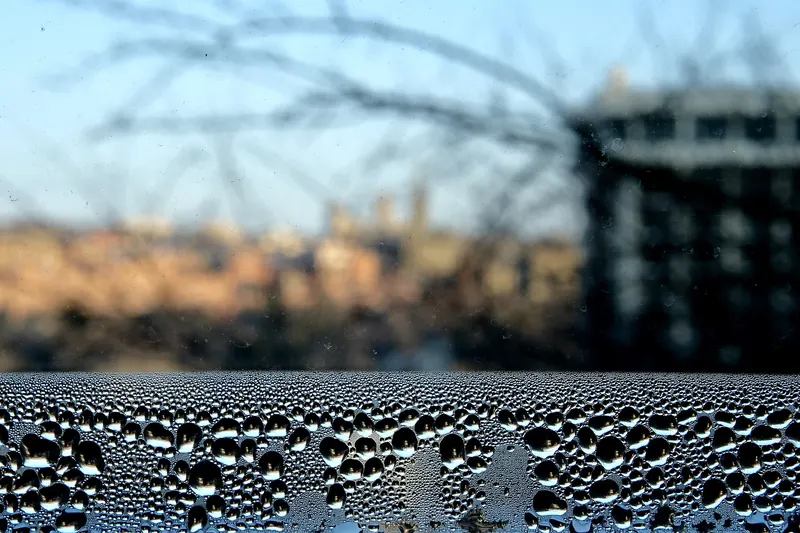
Damp in an old Ayrshire cottage or farmhouse can come from the air inside, from the ground or from rain getting in. Telling them apart first matters, because the fixes are different and the wrong one can harm an old wall.
More on this part of the house is in damp and the sea air. The Scottish Government's guidance on traditional buildings is clear about this: it warns that care is needed to make sure dampness has been properly diagnosed and is not due to condensation.
What does condensation look like?
Condensation is water from the air inside the house settling on cold surfaces. Home Energy Scotland says it happens when there isn't enough air movement and moisture forms on cold surfaces. Typical signs are wet window panes in the morning, black mould in corners and behind furniture, and musty cupboards on outside walls.
It usually gets worse in cold weather, after cooking, showers or drying washing indoors, and in rooms that are only heated now and then. Scottish Government guidance on condensation in traditional buildings notes that intermittently heated buildings are significantly more likely to suffer it.
What does damp from the ground look like?
Damp that comes from the ground shows at the base of walls. The guidance on moisture from the ground says the most common cause of damp at the base of traditional walls is defective ground drainage, and lists ground levels raised against the wall over the years as a usual cause.
The same page notes that condensation on the lower part of a wall may be a contributory factor in what looks like rising damp. So one doesn't rule out the other.
Will an injected damp-proof course fix it?
Often not, in an old stone house. The Scottish Government guidance says injected damp-proof courses in solid masonry walls are usually found to be ineffective, and that barriers can concentrate moisture and salts and restrict drying, leading to decay of stone and mortar. It points first to improving ground drainage and lowering raised ground outside.
Historic Environment Scotland also advises materials that let moisture move through the walls of traditional buildings. It warns that without breathable materials, moisture may build up in the wall.
Could it be rain getting in instead?
Yes, and on the coast this is common. Patches high on a gable, round a chimney or under a window sill point more to rain or a leak than to either condensation or rising damp. Historic Environment Scotland's guide to damp gables covers the symptoms and repair options. For the coastal side of the story, see why a house by the sea is so damp.
What can we do about condensation?
Home Energy Scotland suggests drying washing outdoors where you can, using extractor fans and trickle vents, leaving a gap between furniture and outside walls, and keeping the home heated to at least 15°C where possible in colder months. A house left empty for spells needs its own plan; see how to look after a cottage left empty over winter. Extractor fans and their wiring are a job for an electrician.
What to look at first
- Where the damp is: windows and corners, the base of walls, or high up?
- When it is worst: cold mornings, after cooking and showers, or after rain?
- Whether the damp is only at the bottom of the wall, and how high it reaches.
- The ground outside: is it higher than the inside floor, and are drains clear?
- Gutters and downpipes above the damp patch.
Yours to do, and theirs
You can
- Note where and when the damp appears for a few weeks, with photos.
- Run extractor fans, open trickle vents and keep rooms steadily warm.
- Keep drains and gullies by the walls clear of leaves.
Leave to them
- A damp diagnosis on a stone house is for a surveyor with traditional building experience.
- Lowering ground levels, repairing drains or fitting new fans is for a builder, drainage contractor or electrician.
| Sign | Points to | First step |
|---|---|---|
| Wet windows, mould in corners and behind furniture | Condensation | More ventilation and steadier heat |
| Damp band at the base of the wall | Moisture from the ground | Check ground levels and drainage outside |
| Patches high on a gable or round a chimney after rain | Rain getting in | Check gutters, pointing, render and flashings |
| Damp low on a cold outside wall in winter only | Possibly condensation | Record it before paying for damp-proofing |
In short
Condensation shows on cold surfaces and follows the weather and daily life indoors; damp from the ground shows at the base of walls and usually comes from poor drainage outside. In an old stone house, get a proper diagnosis before paying for an injected damp-proof course.
Also asked about this
Does a damp meter prove we have rising damp?
Not on its own. The Scottish Government guidance stresses thorough diagnosis of moisture sources before any work, so ask for a full survey.
Can condensation happen inside a wall?
Yes. Historic Environment Scotland's condensation guide covers condensation risks in traditional buildings, especially after insulation work.
Who can give free advice on a cold, damp home?
Home Energy Scotland gives free advice on making a home warmer on 0808 808 2282.
Is black mould dangerous?
Home Energy Scotland notes black mould can affect the health of the people living in a home, so treat the cause, not just the stain.
Sources, checked 5 November 2026
- Home Energy Scotland — Make your home warmer
- Scottish Government — Conversion of traditional buildings: guidance, 3.4 Moisture from the ground
- Scottish Government — Conversion of traditional buildings: guidance, 3.15 Condensation
- Historic Environment Scotland — Traditional buildings
- Historic Environment Scotland — Inform Guide: Damp Gables
- Historic Environment Scotland — Inform Guide: Condensation